
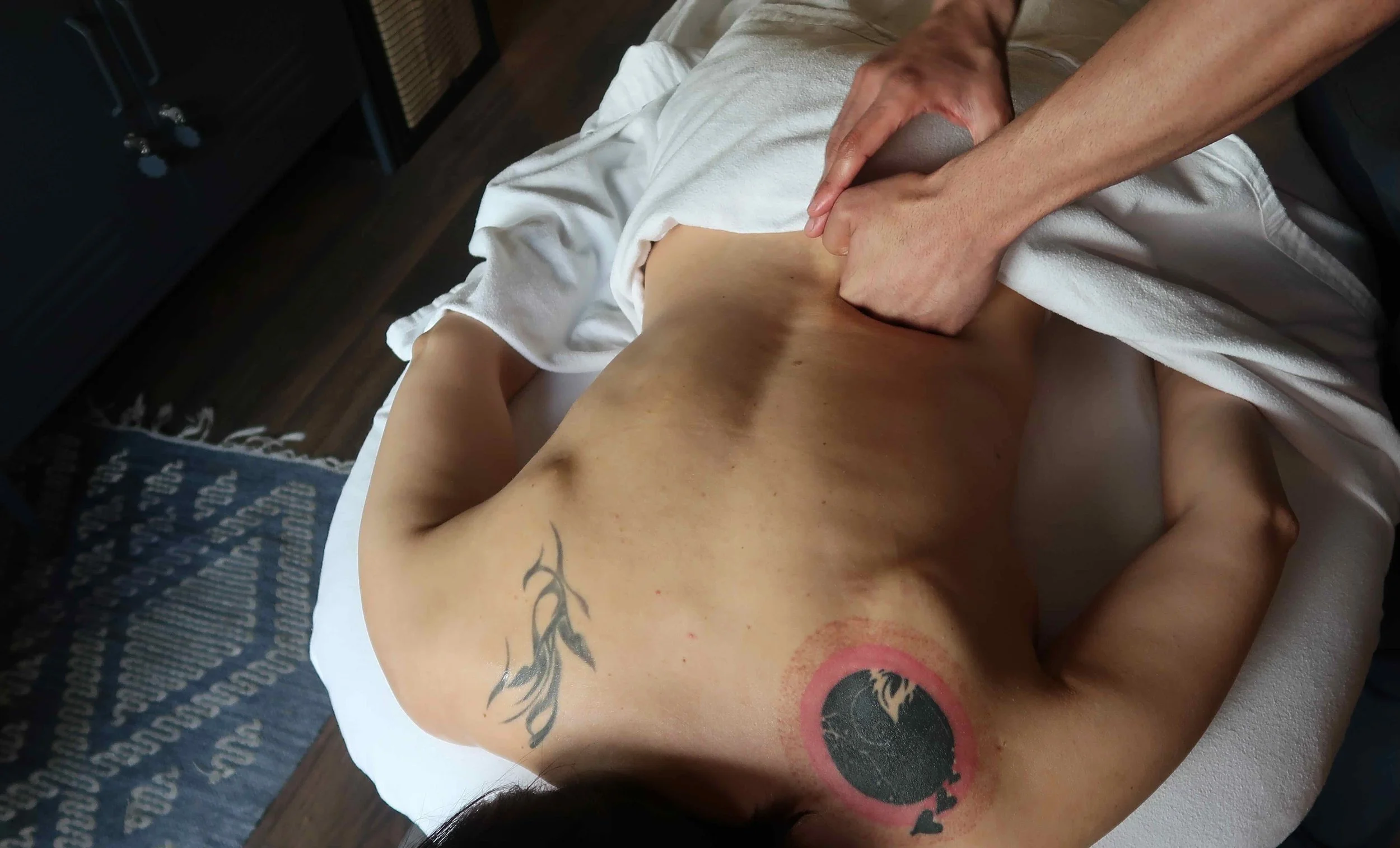
Deep Tissue Massage in Stoke Newington, Hackney
What Is Deep Tissue Massage?
Deep tissue massage involves slow, longitudinal gliding strokes with the intent of encouraging tissue elongation and elasticity.
It’s used in many different types of massage modalities - including sports massage, structural bodywork and more. Strokes can be applied over a broad surface, or involve deep stripping of a more localised area.
Deep tissue massage uses slow, firm pressure to work into the deeper layers of muscle and connective tissue. The focus here is therapeutic - releasing chronic tension and restoring movement in areas that have become tight, restricted or painful over time.
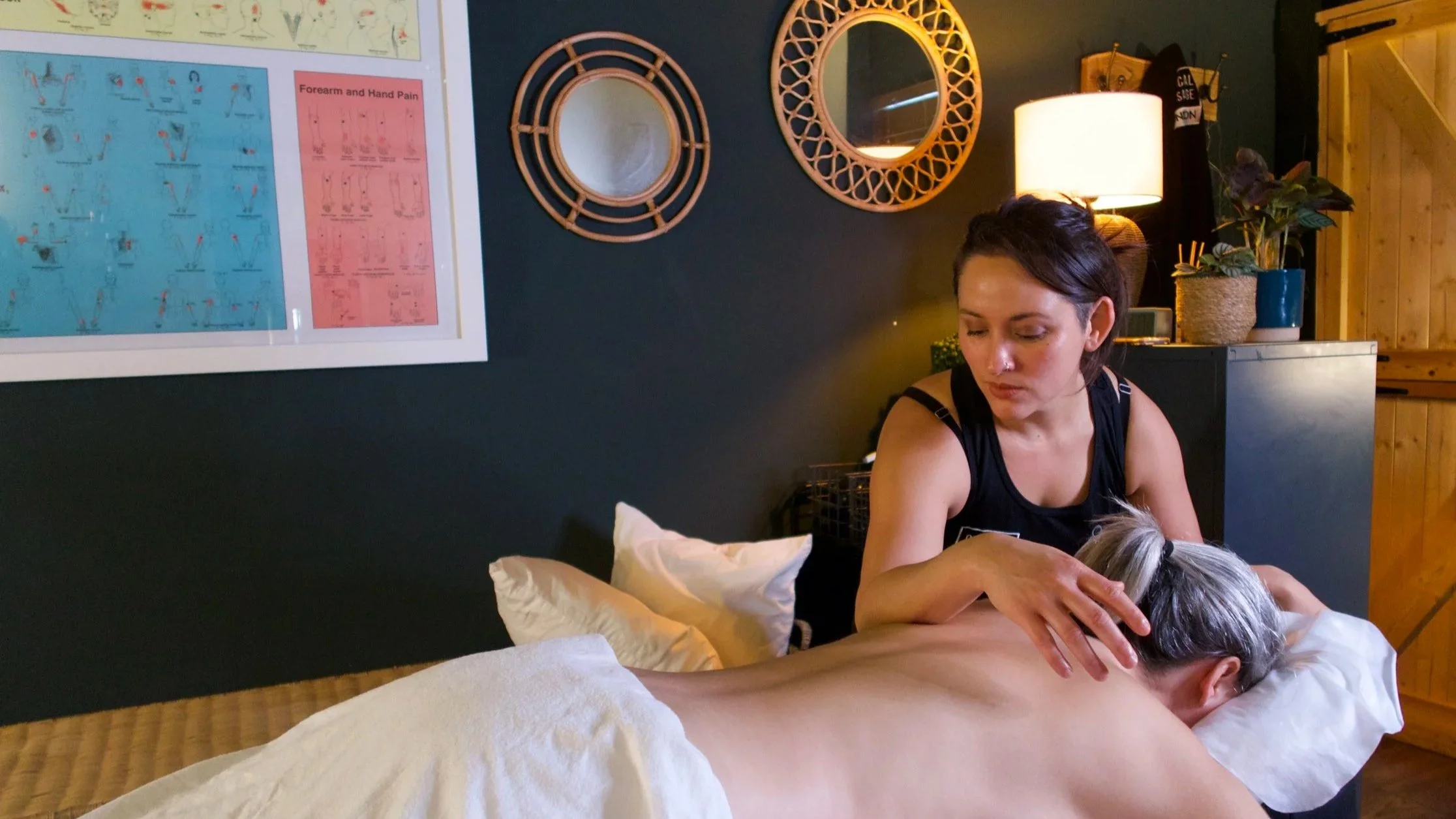
“When done right, deep tissue massage is deeply enjoyable. It’s one of our favourite techniques both to administer, and to receive.
No massage is complete without some deep tissue work!”
Our Approach To Deep Tissue Massage
At Clinical Massage London, our therapists are trained to work precisely and responsively.
Deep tissue work doesn't mean forcing through resistance. It means reading your body, finding where the restriction is, and applying sustained pressure at the right depth and pace to encourage a genuine release. Every session is tailored to what your body needs on the day.
Appropriate pressure levels are achieved through client communication and a listening touch - with the most effective outcome lying at the threshold between pleasure and pain.
Deep tissue massage at Clinical Massage London in Stoke Newington, North London is tailored to your goals, whether you’re dealing with day-to-day tension or recovering from training.
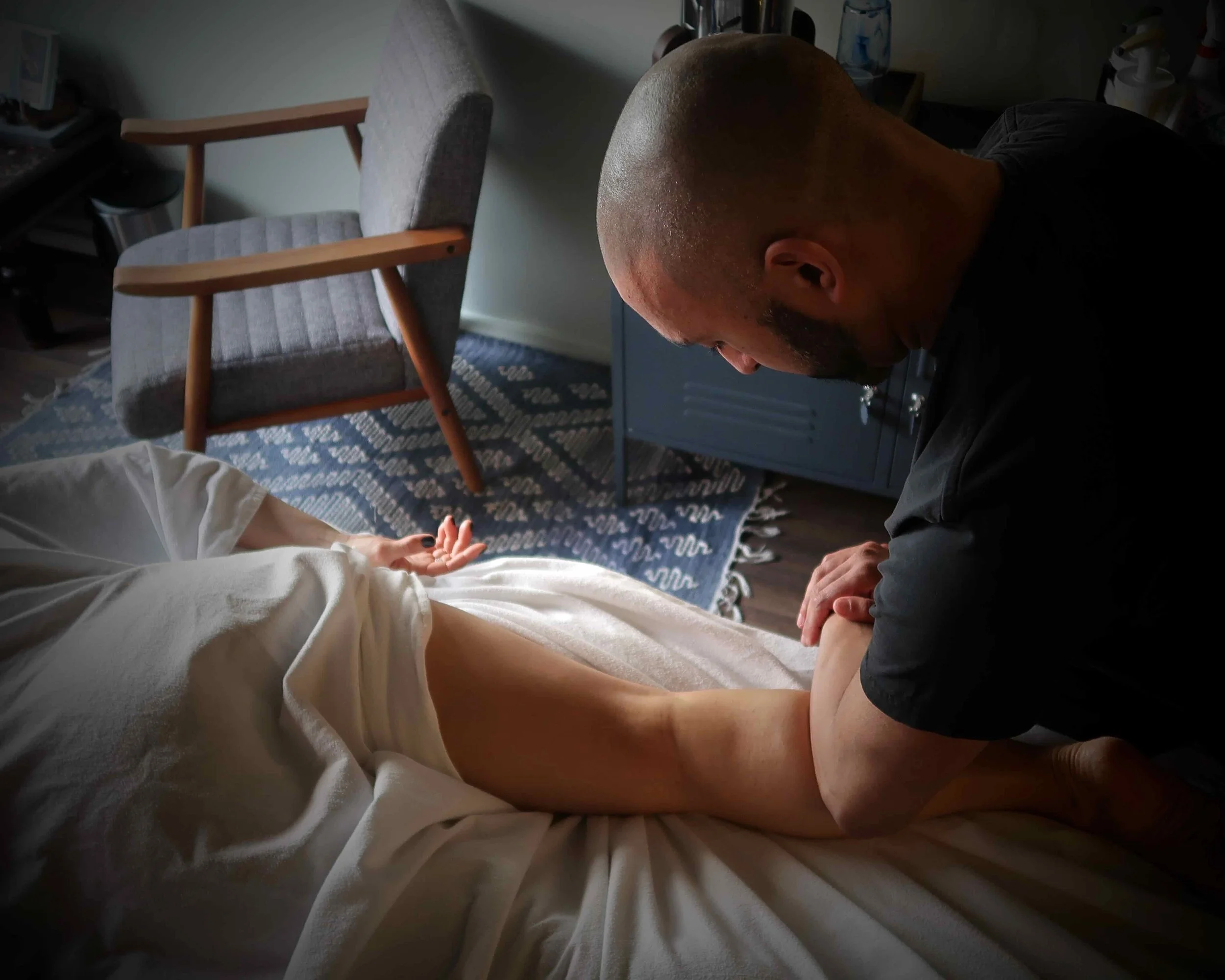
Who Is Deep Tissue Massage For?
Deep tissue massage is well suited to anyone dealing with persistent muscular tension or pain.
whether that's from long hours at a desk, physical work, training, or stress that's settled into your body over months or years.
It's particularly helpful for:
Chronic neck, shoulder and upper back tension from desk work and screen use
Lower back pain and stiffness
Tension headaches linked to tight muscles in the neck and shoulders
Postural imbalances causing recurring pain
Recovery from injury once the acute phase has passed
Restricted range of motion in the hips, shoulders or spine
Stress-related muscle tightness that doesn't shift with stretching alone
You don't need to be in pain to benefit. Many of our clients book deep tissue massage regularly, keeping on top of tension before it becomes a problem, but also because it’s deeply relaxing and a great way to schedule in regular self care.
MOST POPULAR:
60 minutes (£87) · 90 minutes (£114)
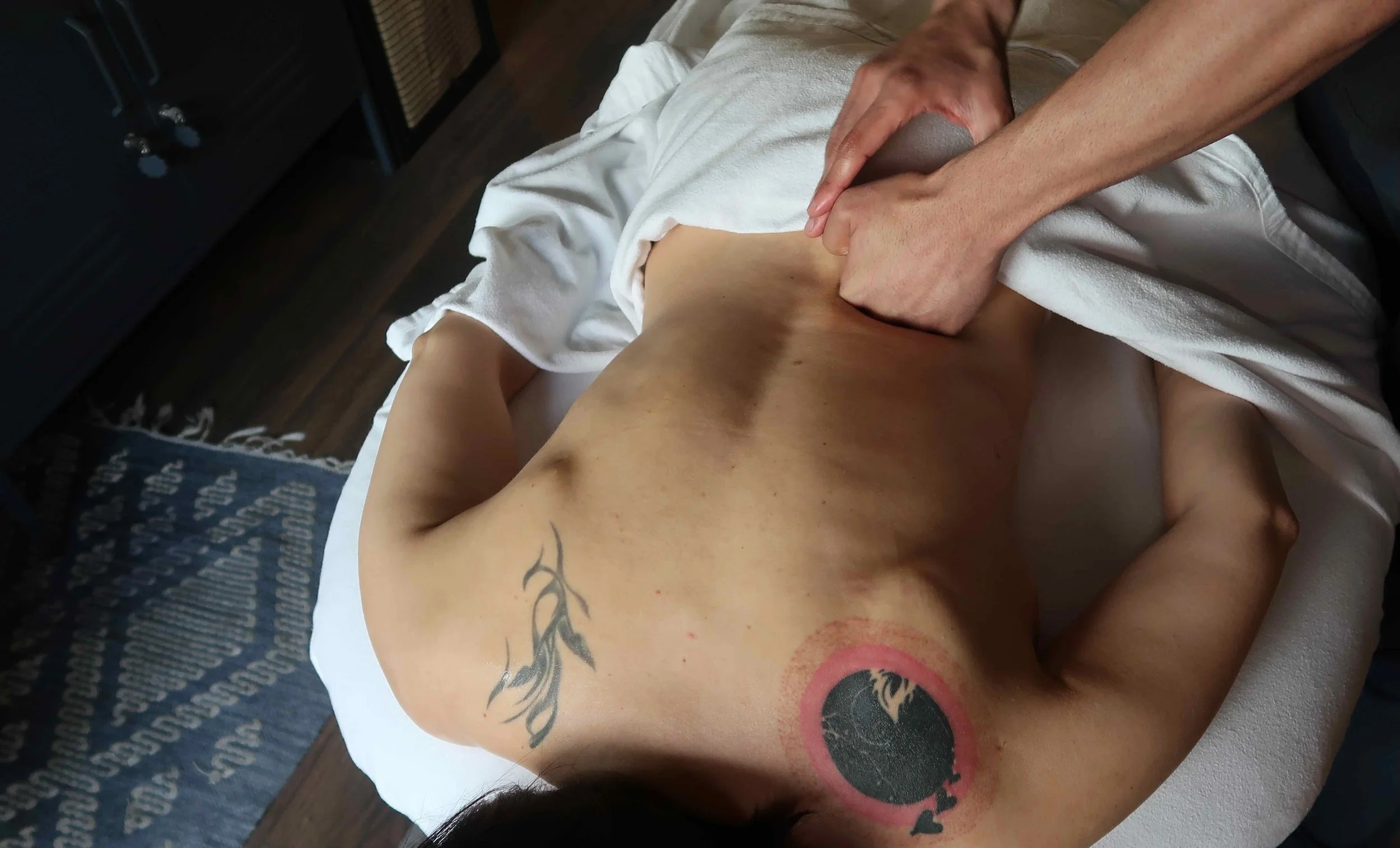
What to Expect in a Session
Your first appointment begins with a conversation about what's going on in your body - where you're feeling tension or pain, how long it's been there, and what you're hoping to get from treatment.
This helps your therapist plan the session and focus their time where it matters most. At Clinical Massage London, deep tissue may be a primary focus or used amidst various other times of massage techniques, depending on what our goals are. Your therapist will use their forearms, soft fists, supported fingers or knuckles, and elbows to apply deep, sustained pressure, working slowly through layers of muscle tissue. The pace is deliberately slow - rushing deep tissue work doesn't achieve much, and your muscles need time to respond and soften under pressure.
Communication during the session is encouraged. Your therapist will check in with you on pressure, but do speak up if anything feels too much or if you'd like more work in a particular area. The best results come from working at a depth your body can accept without bracing against the pressure.
Some tenderness in treated areas for a day or two after the session is normal, particularly if you're new to deep tissue work or carrying a lot of tension. Most clients notice a meaningful difference after one session - less tension, improved range of motion, and a general feeling of having "let go" of something they'd been holding.

How Often Should You Have Deep Tissue Massage?
There's no fixed rule - it depends on what you're dealing with. For chronic pain or tension that's been building for a while, starting with weekly or fortnightly sessions gives your therapist the chance to make real progress. Once things have settled, moving to monthly sessions works well as ongoing maintenance.
For general upkeep - staying on top of desk-related tension, keeping your body moving well - monthly is a good rhythm for most people. Your therapist will recommend a frequency based on your personal goals, and how your body responds.
Pricing At Our Stoke Newington Clinic
All our Clinical & Sports massage therapy sessions (which will include deep issue) are available from 30 to 120 minutes.
As a guide, 60 minutes (£87) is a great place to start for most people - long enough to focus on a main problem area while also working more broadly across the body.
If you have several areas that need attention or prefer a slower, more thorough approach, a 90-minute session (£114) is worth considering.
For a full breakdown of session lengths, what each is best suited for and our complete pricing, see our [pricing page].
Frequently Asked Questions - Deep Tissue Massage
-
Deep tissue massage uses firm, sustained pressure to reach deeper layers of muscle and fascia, so it can feel intense, but it shouldn't be painful. Your therapist will check in with you throughout and adjust the pressure to stay within a range that feels therapeutic rather than uncomfortable. Mild tenderness in the treated areas for a day or two afterwards is normal.
-
That depends on what you're dealing with. For chronic tension or pain, weekly or fortnightly sessions often work best initially, moving to monthly once things settle. For general maintenance, once a month is often a nice frequency to address general build up of tension or stress, and a nice way to schedule in some general self care. Your therapist may recommend a frequency based on what your particular goals are at any given time :)
-
Deep tissue massage is a technique or approach that will often be used within a clinical or sports focused massage. It often entails using a deep ‘muscle stripping’ techniques with firm, focused pressure applied broadly or more specifically along muscle fibres, targeting chronic tension in the muscles - it's suited to anyone dealing with long-term tension or tension-related discomfort. Within the wider scope of a ‘clinically focused’ or ‘sports focused’ massage, deep tissue will likely be used alongside other massage techniques or approaches such as geared towards athletic performance and recovery, including stretching and mobilisation techniques.
-
For most people, 60 minutes is a great place to start - long enough to focus on a main problem area while also working more broadly across the body.
If you have several areas that need detailed attention, a 90-minute session gives your therapist the time to be thorough.
We also offer 30, 45, 75 and 120-minute sessions. 75 minutes offers the most value for your money.
For a full guide on what each session length is best suited for, see our [pricing and session lengths] page.
Book a Deep Tissue Massage
Ready to get started?
Book online below or get in touch if you'd like to talk through whether deep tissue massage is the right approach for you.
Find Us
Clinical Massage London is based in Stoke Newington, North London.
We're a short walk from Stoke Newington High Street, with easy access from Hackney, Dalston, Islington, Finsbury Park and Newington Green.
Getting here: The nearest stations are Stoke Newington (overground) and Dalston Junction (overground). Buses 73, 476 and 393 all stop nearby. There is pay-and-display parking on surrounding streets.