
How Sports Massage Stretching Can Help Non-Athletes Move Better
From Desk Life to Weekend Activity
You might think advanced sports massage stretches are just for athletes, but the truth is, they can be incredibly helpful for anyone, especially if you spend most of your week sitting and only occasionally get active on the weekends.
Tight and stiff muscles don’t just affect athletes - they affect all of us who sit, commute, or work at a desk for long stretches. This article walks you through a couple of real-life examples of how these techniques can be useful for non-athletes.
We’ll break down how the stretches work, why they’re effective, and how they can be integrated into a sports massage session to help you move more freely, reduce tension, and prepare your body for bursts of activity - especially helpful when you have a busy life and don’t have much time for self care in between!
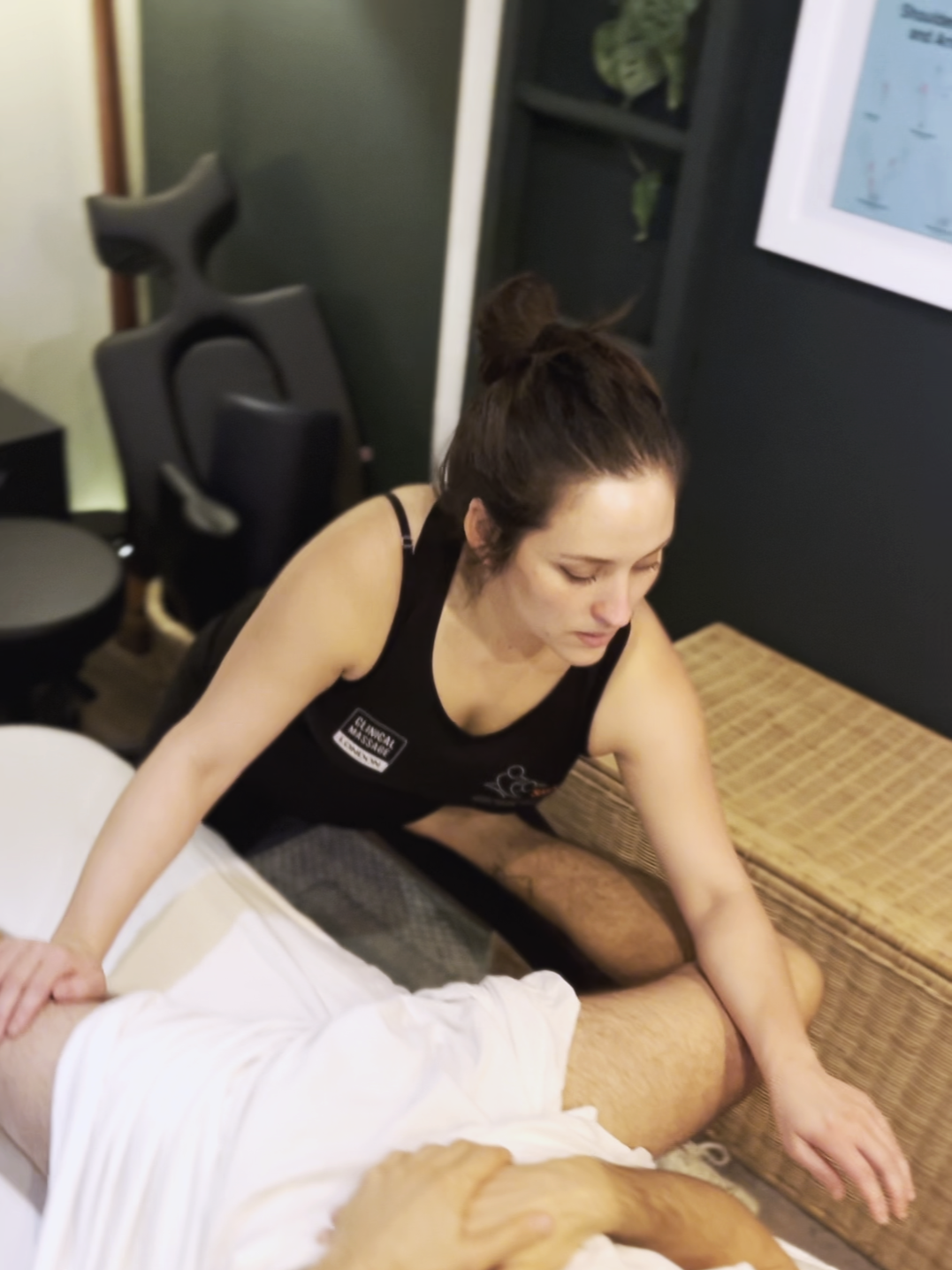
Sports massage therapist performing PNF stretching to the short adductor muscle group on on a client.
Why Stretching Matters for Desk Workers and Weekend Warriors
If your job is frustratingly sedentary, your life is busy, and you don’t get up and walk around much for hours at a time, that can mean certain muscle groups are held in suboptimal positions for significant periods. Then, when you finally sprint for the bus or join a game of weekend football, those same muscles and tendons are suddenly loaded and lengthened quickly, which is exactly when injuries can happen (Opplert & Babault, 2018).
Take the Hamstrings for instance.
I often see people coming in who tell me they have a history of hamstring strains. From an anecdotal perspective, I’ve noticed many of these clients have a couple of things in common - desk jobs, busy lives, not much time for self care during the week, followed by sudden bursts of occasional activity. Not everyone will fit the pattern, of course, but it is a common one.
So what’s happening?
Here’s one theory: Hamstring strain injuries occur during eccentric actions (when the muscle is lengthening under load).
Sports medicine research emphasizes that eccentric strength and fascicle length adaptations (e.g., through specific conditioning) reduce injury risk, whereas lack of such conditioning - typical in recreationally active people - increases it.
Because prolonged sitting and lack of dynamic loading place the hamstrings in a suboptimal mechanical and neuromuscular state, when these muscles are then suddenly loaded - especially in eccentric, high‑speed conditions, such as sprinting or quick direction changes in a football game, they are more likely to experience strain injuries because they must absorb high forces while lengthening, and they may not have the eccentric strength or neuromuscular readiness to handle that load.
So how can advanced sports stretching help?
How Stretching Works in a Sports Massage Session
If you come in for a session with particularly tight hamstrings, we can integrate specific stretching techniques that help condition your muscles and get used to being loaded across its range of motion, thereby improving their capacity to lengthen safely under load, and preparing your body for weekend for bursts of less sedentary activities!
Here’s the most common techniques we are likely to incorporate into your session:
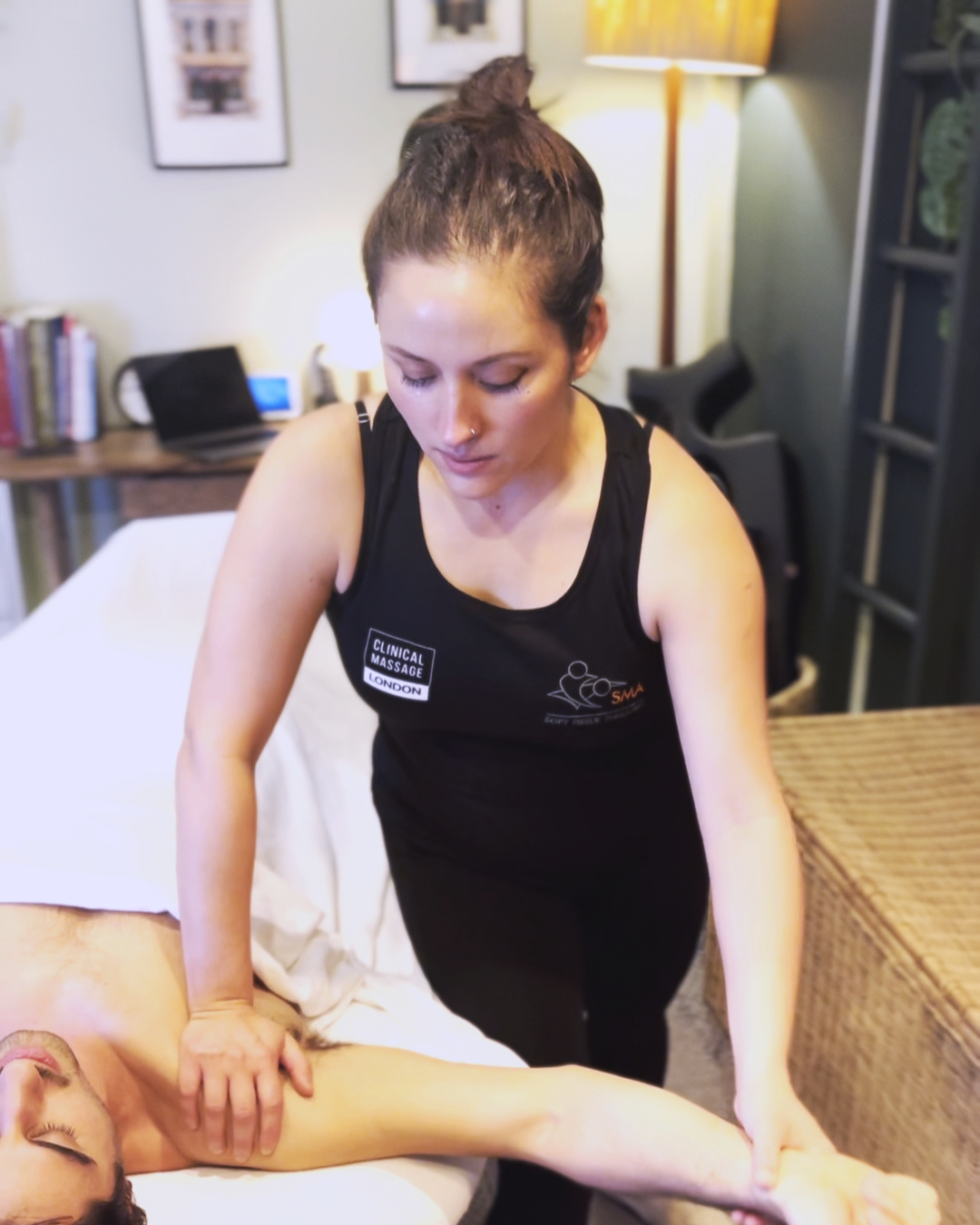
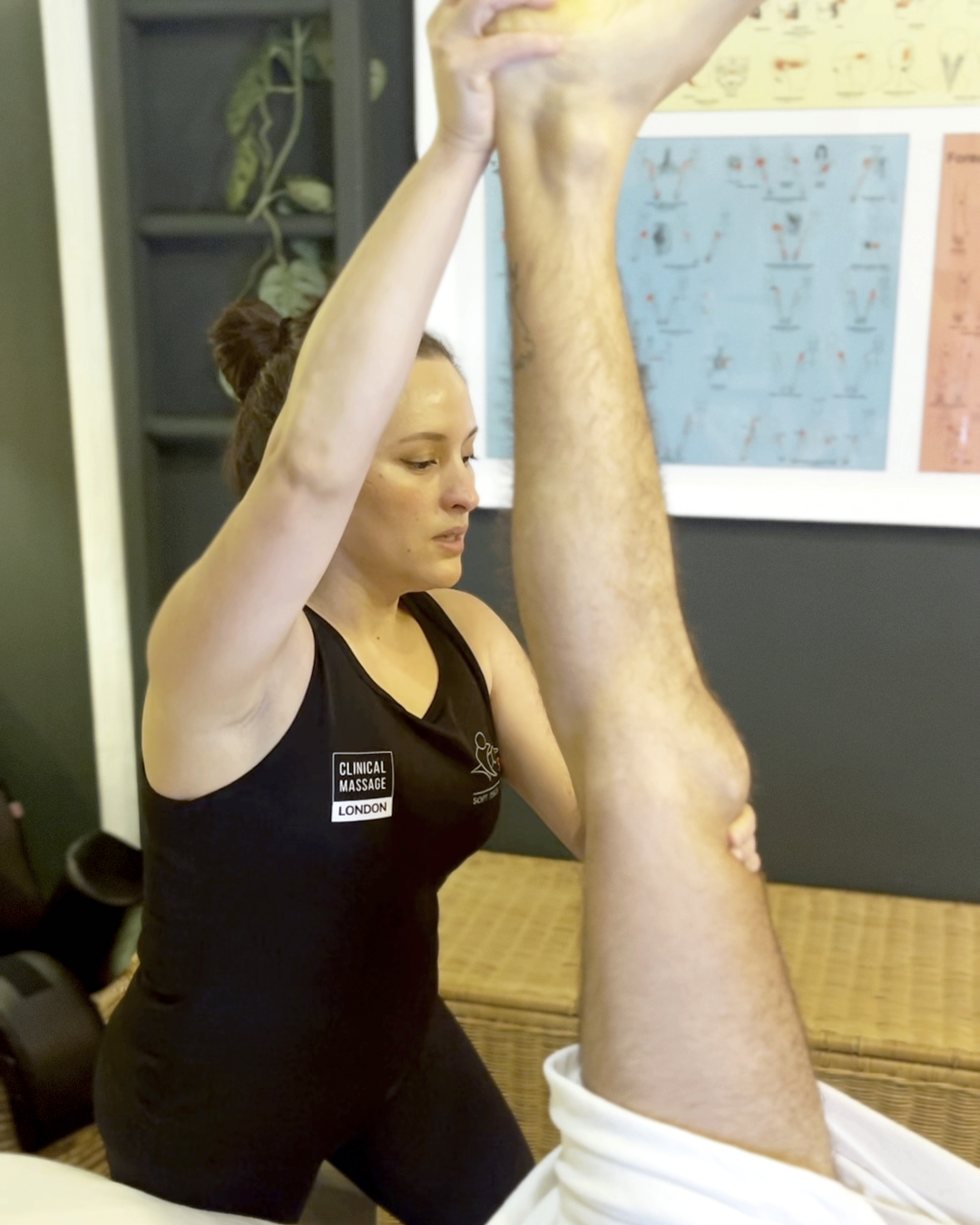
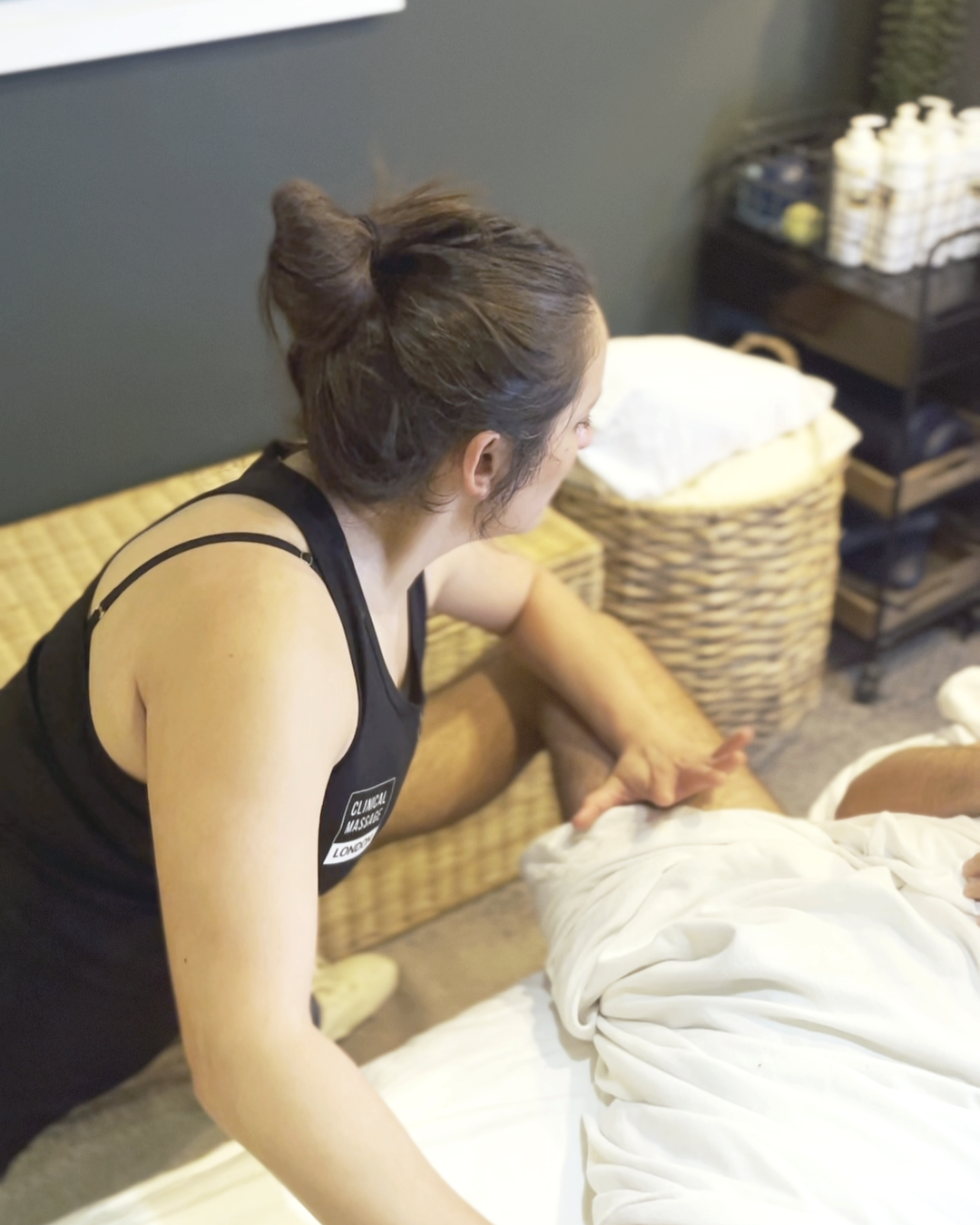
Proprioceptive Neuromuscular Facilitation (PNF)
What it is:
PNF, often described as contract‑relax stretching, and combines an isometric contraction of a muscle followed by a deeper stretch. When performed correctly this cycle allows the muscle to reach a greater range of motion than passive stretching alone.
Here’s how it works physiologically:
Traditional explanations have suggested involvement of proprioceptive reflexes such as autogenic inhibition(Golgi tendon organs reducing muscle tension) and reciprocal inhibition (activation of opposing muscles facilitating relaxation), though research indicates the neurophysiology is complex, and changes in perception of stretch and neuromuscular responses may be more important than proprioceptive reflexes alone.
Clinical studies confirm PNF reliably increases range of motion (ROM) at joints such as the hamstrings more than static stretching. In controlled trials, PNF produced greater gains in knee extension ROM than static stretching in a single session.
Some research finds PNF (and instrumental assisted techniques) improve hamstring flexibility significantly more than static stretching alone over repeated sessions.
Massage + PNF Outcomes:
When integrated into a massage session, PNF assists in modifying the hamstrings’ mechanical and neural responses, leading to:
✔ Improved flexibility and extensibility of the hamstring muscle–tendon unit
✔ Better length‑tension relationships, so the muscle can produce force more efficiently in long positions
✔ Reduced passive stiffness that may contribute to strain injuries
✔ Enhanced functional preparation for dynamic activities like running or sudden sprints
Example in practice:
A client who sits most of the day often has hamstrings that are functionally stiff — not necessarily short, but restricted in dynamic length‑tension performance. Using PNF during a massage session gently increases their ROM and prepares the hamstrings to withstand eccentric loading during sprinting or quick moves, reducing micro‑tear risk.
Active Engagement Technique (AET) / Active Assisted Stretching
What it is:
Active Engagement Techniques involve the client actively moving or contracting muscles while the therapist applies pressure or guides the tissue, rather than stretching a muscle in isolation. This might include guided movement through a range while the therapist provides supportive manual contact.
How it works physiologically:
Incorporating active muscle contraction and movement during massage engages neuromuscular pathways, enhancing the brain–muscle feedback loop and improving motor control and coordination.
Active movement with massage also helps improve tissue glide, reduces localized stiffness, and encourages functional patterns more similar to everyday activities and athletic tasks.
Massage + AET outcomes:
When AET is used in hamstring massage work, it can:
✔ Improve neuromuscular coordination during both concentric and eccentric contractions
✔ Enhance the muscle’s ability to fire efficiently at different lengths (important in running, stopping, changing direction)
✔ Support functional strength and control, not just flexibility
✔ Promote integrated movement patterns involving glutes, hamstrings, and hips
Example in practice:
Instead of just passively stretching the hamstrings, the client might actively lift or control a leg while the therapist uses sustained pressure and guides the motion. This encourages not only tissue lengthening but also improved movement quality, making the hamstrings better prepared for real‑world demands like stair climbing, kicking, and sprint starts.
How These Techniques Help Prevent Hamstring Strains
1. Optimize Length–Tension Relationships
PNF enhances hamstring flexibility more than typical static stretching, helping the muscle operate effectively across its full range.
2. Improve Neuromuscular Function
AET trains the muscle to engage correctly under load, reducing disorganized firing patterns that can contribute to strain when muscles respond quickly to sudden demands.
3. Prepare the Muscle for Eccentric Loads
Both techniques help the hamstrings tolerate dynamic length changes - critical during sprinting and sudden stops - by combining improved ROM with controlled activation.
4. Broader Functional Integration
Integrating these techniques into massage addresses not just tissue extensibility but functional movement patterns, neuromuscular coordination, and force generation, all of which reduce the likelihood of injury in “weekend warrior” activities.
In summary, you don’t have to be a sports person to benefit from a sports massage!
Massage isn’t just a luxury, it can also be a smart, functional reset that helps you move more freely, recover faster and prevent common injuries.
If you want to explore how sports massage with integrated stretching can help you move more freely, reduce tension, and prevent weekend injuries, we’d love to help.
👉 Book a session at Clinical Massage London and give your muscles the reset they deserve.
References
Opplert, J. & Babault, N. (2018). Acute effects of dynamic stretching on muscle flexibility and performance. Sports Medicine.
Sharman, M.J., Cresswell, A.G., & Riek, S. (2006). Proprioceptive neuromuscular facilitation stretching: mechanisms and clinical implications. Sports Medicine.
Feland, J.B. et al. (2011). Efficacy of static stretching and PNF on hamstring length after a single session. Journal of Strength & Conditioning Research.
Kay, A.D. et al. (2025). Eccentric contractions versus static stretching: effects on range of motion and muscle–tendon mechanics. European Journal of Applied Physiology.
Chandler, T.J. et al. (2016). Stretching of active muscle elicits changes in strain risk factors.
Weppler, C.H. & Magnusson, S.P. (2010). Increasing muscle extensibility: a matter of increasing length or modifying sensation? Physical Therapy.
Freitas, S.R. et al. (2023). Effects of static stretching on muscle stiffness: systematic review and meta‑analysis.