From Neuroscience to Massage Meet Channara Agoro-Burns
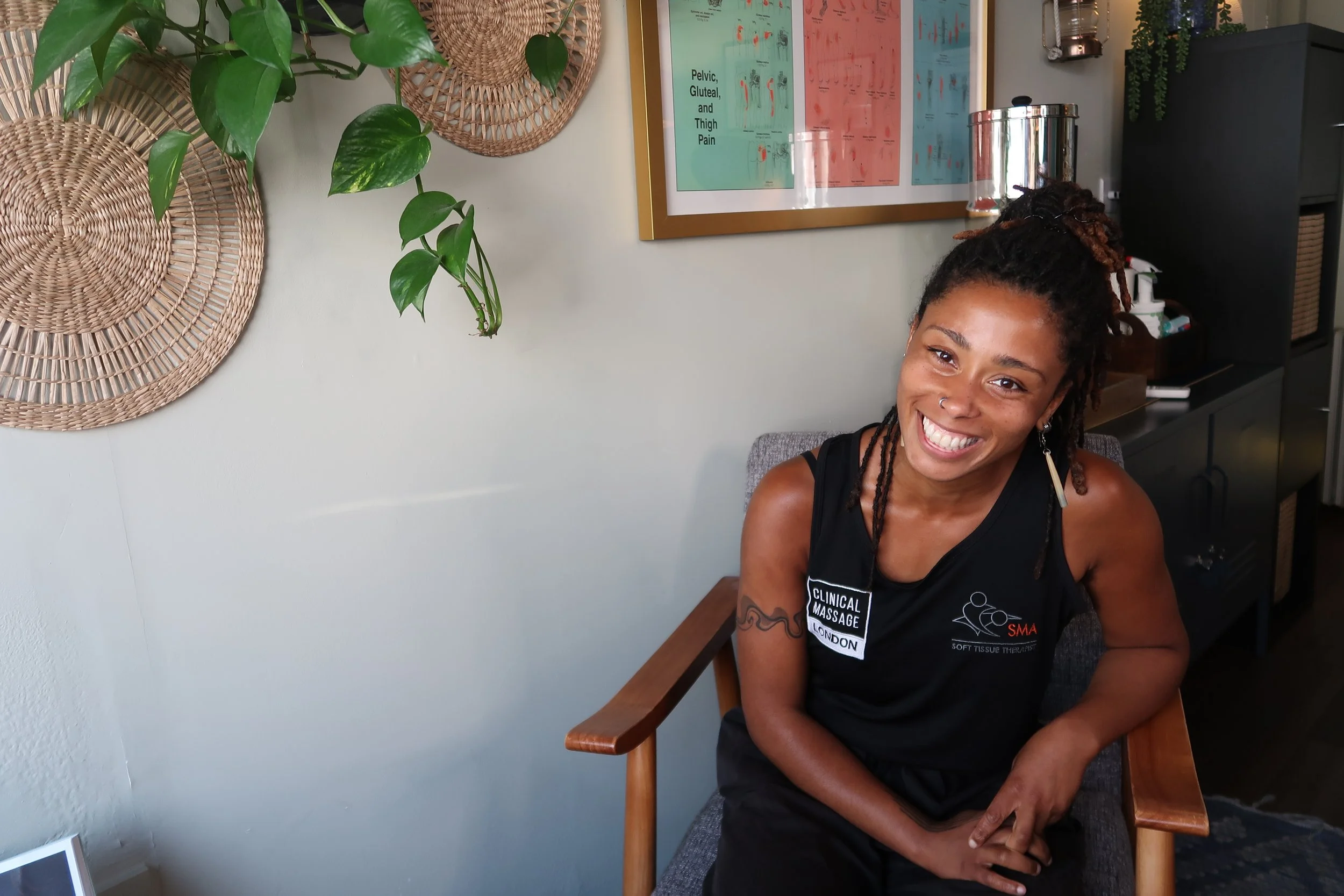
Massage ties her interests in neuroscience, history and the human experience into a practice that provides inclusive, neurodiversity-affirming, trauma-informed and deeply client-centred care
We Are Thrilled To Be Welcoming Channara Agoro-Burns To The Team At Clinical Massage London
Get to know her in this Q&A, as she explains how the questions which led her to study neuroscience and African history, eventually led her to massage.
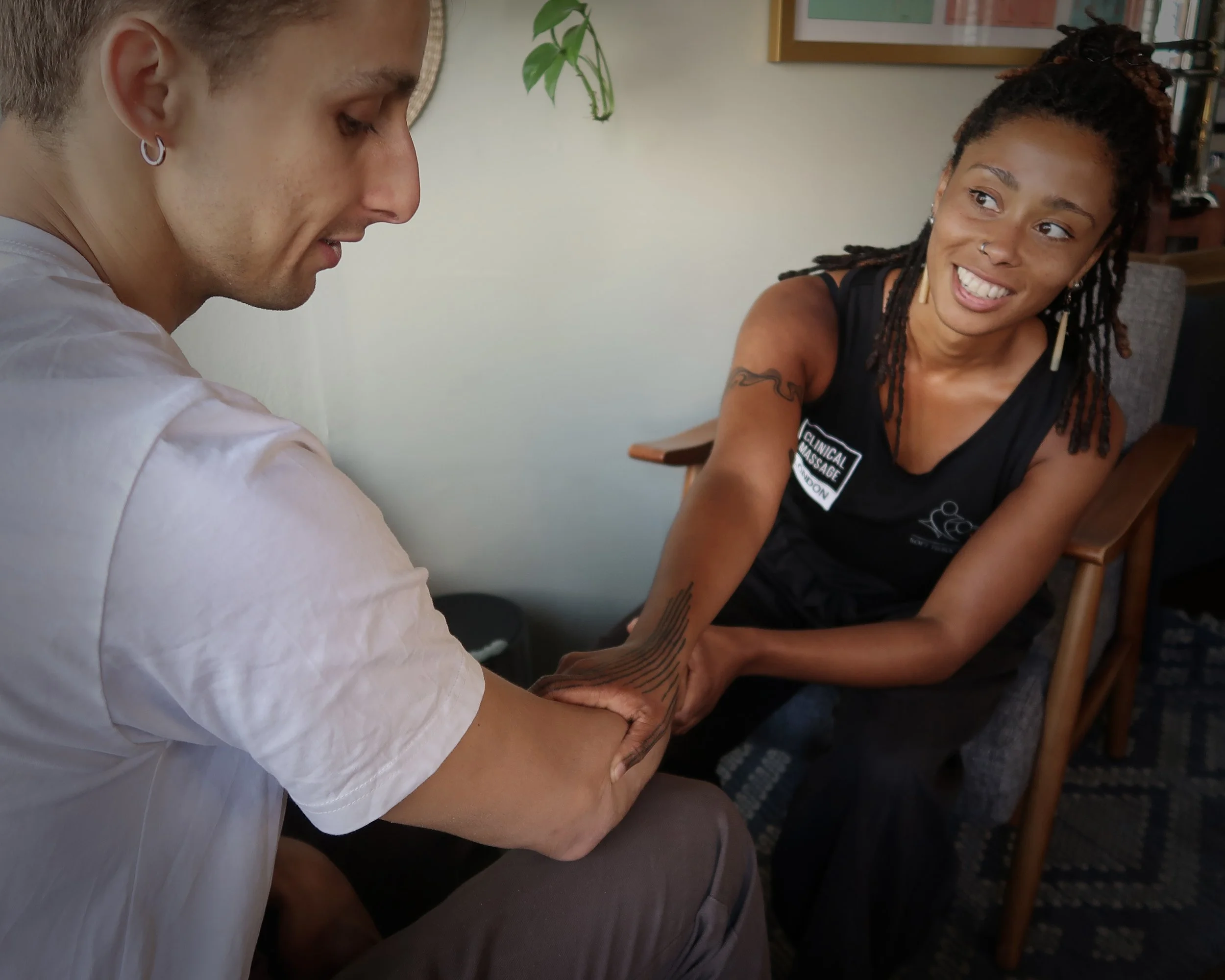
Channara believes in creating spaces where people feel safe enough to be curious about what their body may be communicating.
Tell us a little about yourself. Where are you from, and what did you do before massage therapy?
I'm London born and bred, having grown up in South London in a mixed heritage family. My mum's family is from Lagos in Nigeria and my dad's family is from Sunderland in the North East of England. They are two very different cities with their own histories of struggle, resilience and community. On one side there's the working-class mining tradition of Sunderland and resistance to Thatcherism, and on the other there's Lagos, one of the most vibrant and complex cities in the world, shaped by colonialism, trade and resistance to European imperialism. Moving through the world as a mixed raced person, directly experiencing the body as a site where so many different histories and realities are held and activated depending on context is what drew me to studying the human body for such a long time.
“Moving through the world as a mixed raced person, directly experiencing the body as a site where so many different histories and realities are held and activated depending on context is what drew me to studying the human body for such a long time.”
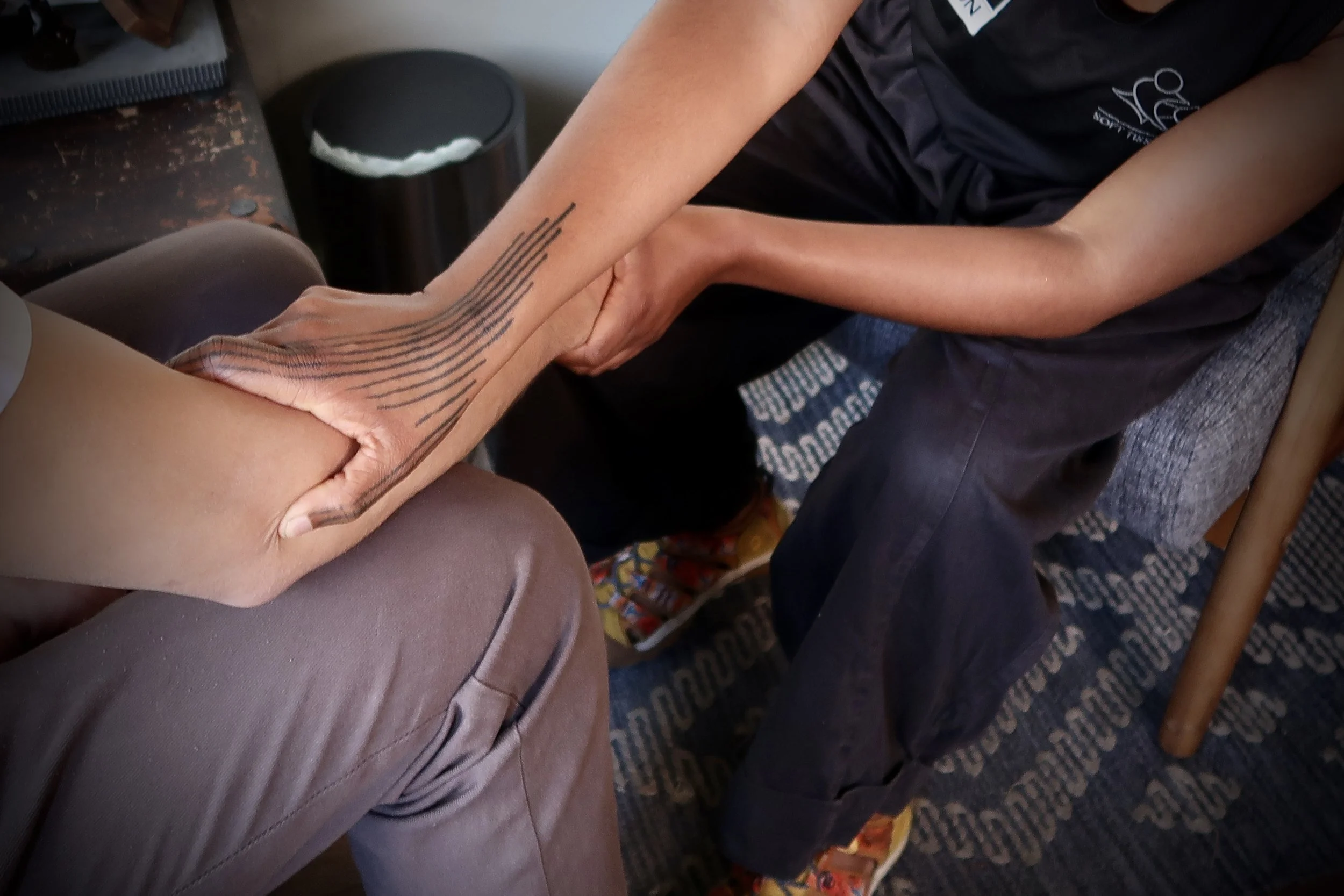
Channara is interested in how historical socio-cultural context shapes the relationship between interoception and exteroception; how we experience the world outside, and within ourselves.
Your path here is unusual and interesting. You studied neuroscience at Nottingham, then History and Arabic at SOAS, including time in Alexandria. How did that varied background lead you to bodywork? Do those earlier studies still shape how you think about the body and about people?
Before becoming a massage therapist I spent many years studying. I first studied Neuroscience at university because I was fascinated by how the body receives information from the world and transforms it into experience. Learning about afferent and efferent nerve fibres, sensory processing and the nervous system gave me a foundation for understanding how we perceive ourselves and our environment, and what can happen when these systems become dysregulated.
Later I studied Arabic and History at SOAS, including time living in Alexandria. There I became interested in a broader question: what does it mean to inhabit a body in a particular place and time? I studied African history, decolonial theory and the ways communities have responded to violence, displacement and oppression throughout history. I became particularly interested in how people have cared for themselves and one another through plants, spiritual practices, touch and collective forms of healing.
Looking back, I think what I was really trying to understand was the relationship between interoception and exteroception: how we experience the world outside of ourselves and how we experience the world within ourselves. How trauma, stress and social conditions can interfere with those processes. Bodywork allows me to explore those questions every day in a direct and practical way. It brings together my interest in neuroscience, history and human experience, while allowing me to work alongside people as they develop a different relationship with their bodies.
I also think my interest in healing comes from my family. Growing up, I heard stories about women in my mother's family who were herbal healers, growing medicinal plants and caring for people within their communities. Similar traditions existed in working-class communities in Britain too, where people often relied on local knowledge and mutual care alongside formal medicine. I never met many of these women, but their stories stayed with me. Looking after bodies, easing suffering and helping people reconnect with themselves feels like a continuation of that lineage.
“Looking back, I think what I was really trying to understand was the relationship between interoception and exteroception: how we experience the world outside of ourselves and how we experience the world within ourselves. How trauma, stress and social conditions can interfere with those processes.”
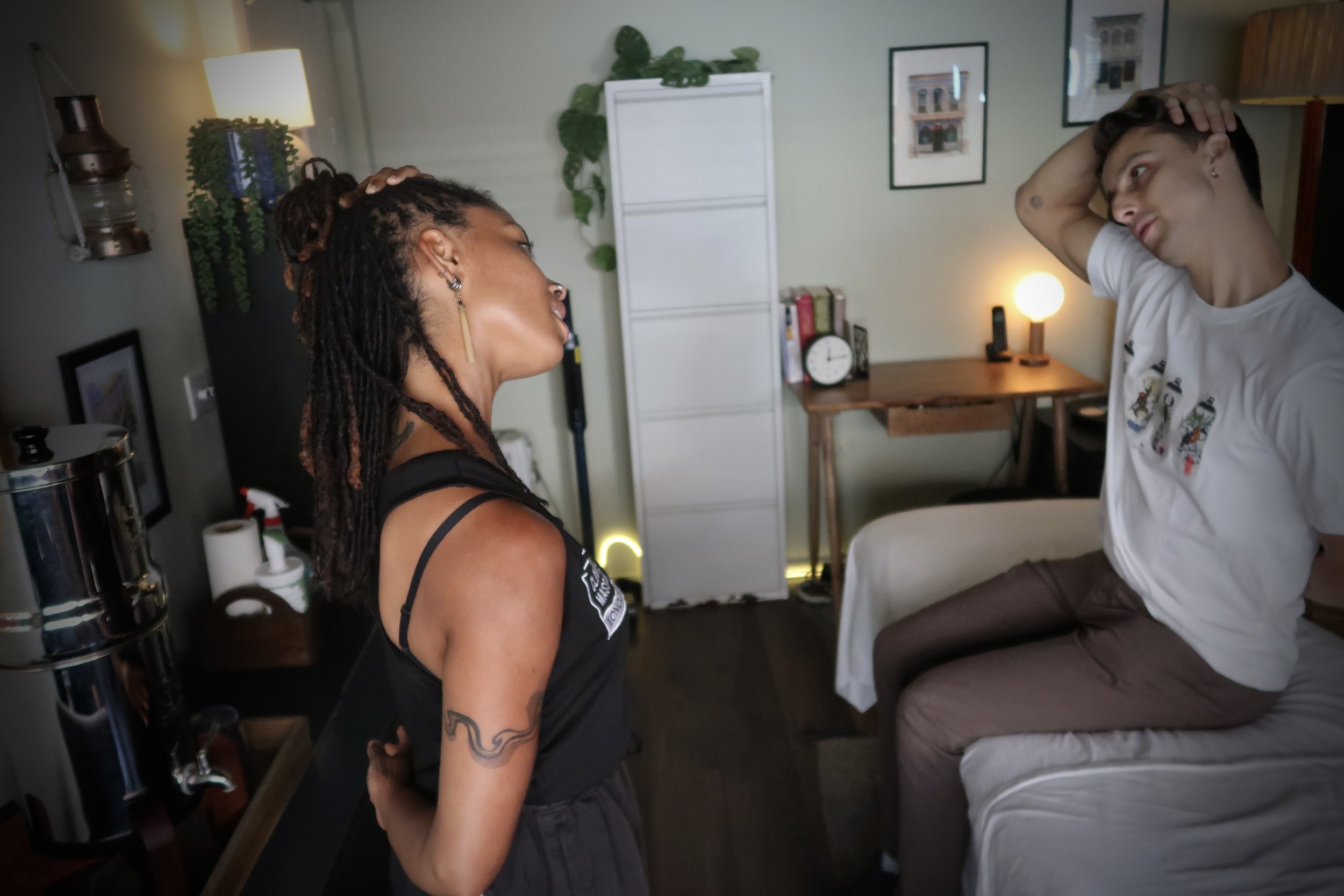
Massage Therapist Channara giving some aftercare advice to a client. Here she demonstrates stretches to ease neck tension at our massage therapy clinic in Dalston
How did you first discover massage therapy, and how has it impacted your own life?
My first memorable experience of massage was while working at Lush and the Lush Spa. I remember being in a candlelit room, on top of a heated blanket, with hot stones and a soothing blend of essential oils, listening to recorded birdsong and beautiful instrumentals. The therapist was so attentive, and seemed to respond to so many subtle, non-verbal cues. At the time I was navigating my own experiences of trauma, psychotherapy and learning how to feel more at home in my body. Even though it wasn't an advanced clinical massage it was extremely therapeutic. It felt like a weighted blanket for my nervous system. For the first time I experienced touch not as something aggressive demanding attention, but as something that offered comfort, safety and space. That experience changed my relationship with my body and planted the seed that eventually led me into massage therapy.
“What I love about clinical massage is that it combines scientific understanding with compassionate human connection. It allows me to work with both the physical and emotional dimensions of pain while always keeping the client’s experience at the centre of treatment.
”
From Personal Journey to Clinical Massage Therapist: Pain, Stress and the Nervous System
What made you decide to train as a clinical massage therapist?
Massage started as part of my own journey towards living a more embodied life. As I developed as a therapist, I became increasingly interested in the relationship between pain, stress, trauma and the nervous system. I wanted a deeper understanding of how massage could support people experiencing persistent pain and complex health conditions, which led me to train in advanced clinical massage. What I love about clinical massage is that it combines scientific understanding with compassionate human connection. It allows me to work with both the physical and emotional dimensions of pain while always keeping the client's experience at the centre of treatment.
“ As I developed as a therapist, I became increasingly interested in the relationship between pain, stress, trauma and the nervous system. I wanted a deeper understanding of how massage could support people experiencing persistent pain and complex health conditions, which led me to train in advanced clinical massage. ”
Jing Method Clinical Massage: An Evidence-Informed, Client-Centred Approach
You're currently on the Jing Level 6 diploma. What drew you to the Jing approach in particular, and what has it taught you about how you want to practise?
I love the matriarchal nature of Jing, Rachel and Meghan have created a learning environment that is inclusive, neurodiversity-affirming, trauma-informed and deeply client-centred. Their teaching is grounded in the understanding that clients are the experts on their own bodies. My role is not to "fix" somebody but to work alongside them, helping them better understand their pain and exploring what might help. The Jing approach combines evidence-informed clinical reasoning with a strong emphasis on therapeutic relationship. That balance really resonates with me. The humanistic principles taught at Jing, particularly Carl Rogers' concept of unconditional positive regard, have become central to how I practise. I believe what clients tell me about their bodies, their pain and their experiences. I try to meet people exactly where they are, without judgement, and create a space where they feel safe enough to be curious about what their body may be communicating.
“I believe what clients tell me about their bodies, their pain and their experiences. I try to meet people exactly where they are, without judgement, and create a space where they feel safe enough to be curious about what their body may be communicating.
”
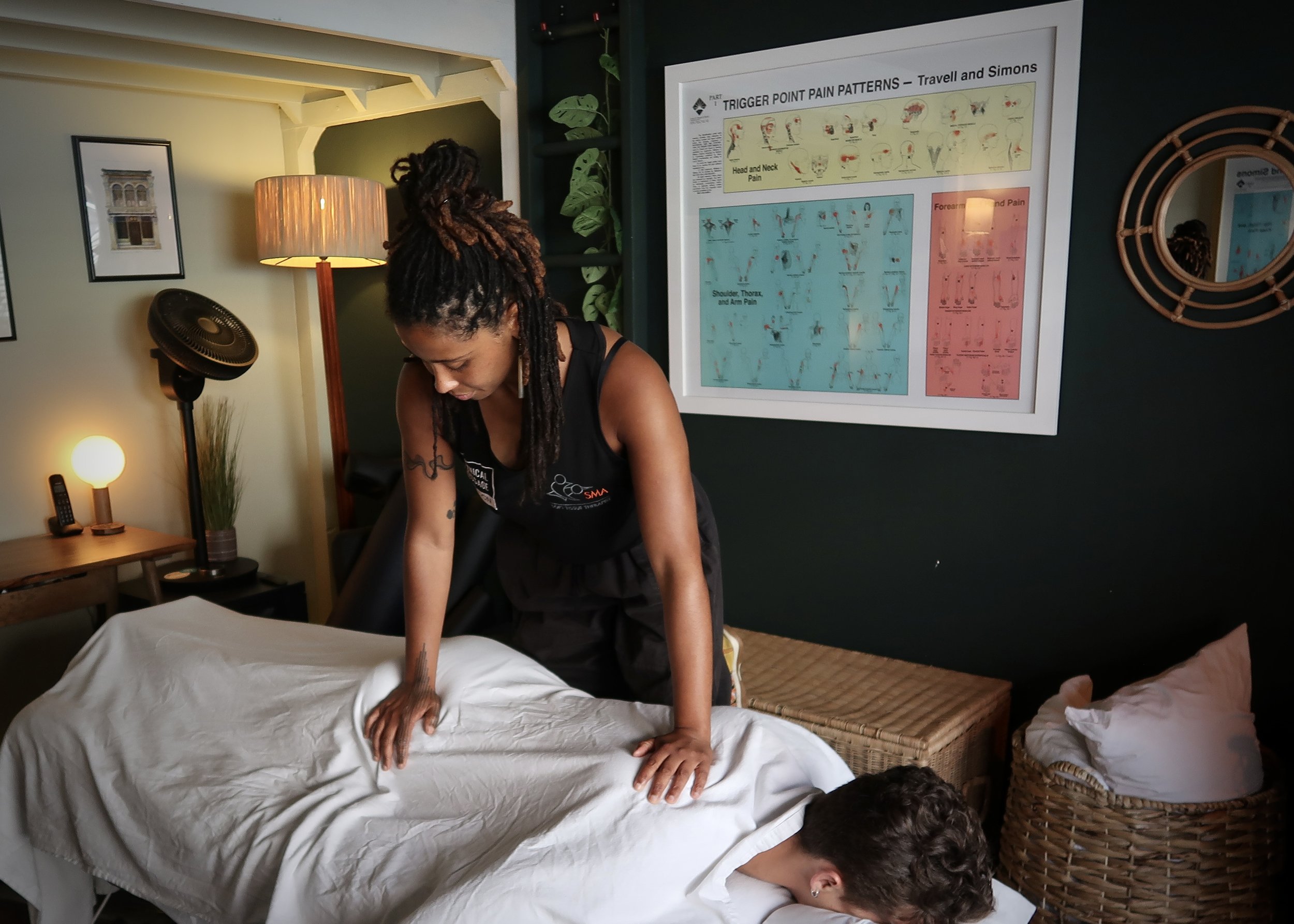
Therapist Channara is interested in how massage therapy allows us to work on both the physical and emotional dimensions of pain, while always keeping the client's experience at the centre of treatment.
Clinical Massage for Chronic Pain, Trauma and Stress
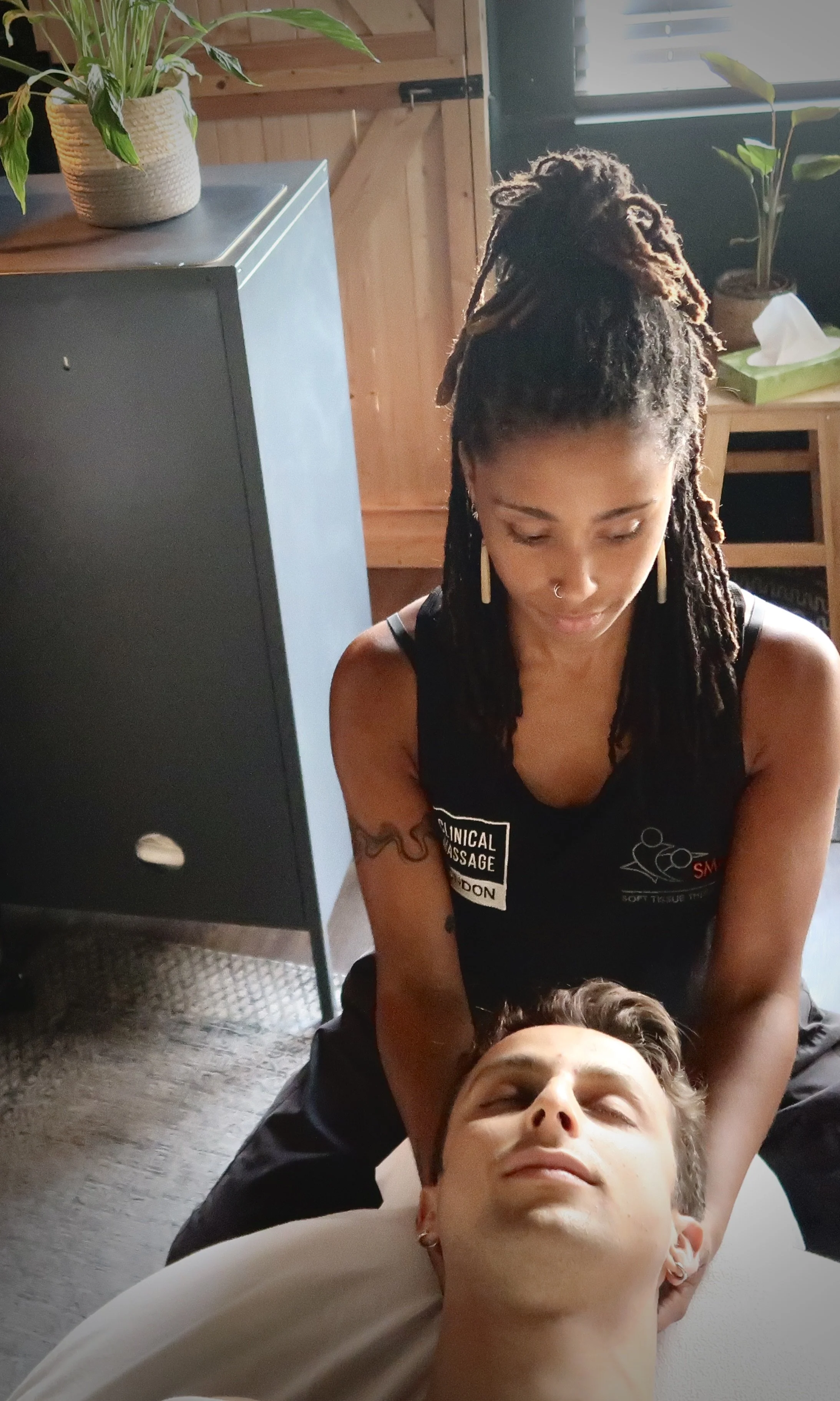
Massage therapist Channara believes in giving someone time to notice what they're feeling, to process a sensation, or decide what they want next.
Complete this sentence in your own words: the clients I feel most drawn to working with are…
…people who struggle with interoception - our ability to sense what's happening inside our bodies. This can be especially relevant for people who have experienced trauma, and as a result have holding patterns which cause pain that can result in chronic back, hip and neck pain, fibromyalgia/ME/CFS, pelvic and menstrual problems, IBS, and headaches/migraines. And people living with chronic pain, stress, burnout, trauma, chronic illness, or those who simply feel disconnected from their bodies. Many of the people I work with have spent years feeling unheard, dismissed, or struggling to make sense of their symptoms. I find it incredibly meaningful to create a space where people feel believed, supported and able to reconnect with their own experience
When you sent in your cover letter to work here, you spoke powerfully about the link between structural inequality, systemic oppression and how people experience pain. Can you unpack that for someone reading your profile? What does it look like in practice, in the treatment room?
Having worked at BAATN, the Black, African, Asian Therapy Network, and studied the biopsychosocial model of pain, I am particularly interested in how structural inequality, systemic oppression and marginalisation can influence pain presentation and management. I believe our bodies do not exist in isolation from our social realities. Experiences of racism, sexism, homophobia, transphobia, ableism, and poverty all shape how pain is experienced and regulated. In practice this means listening carefully, believing what people tell me about their bodies and understanding that pain is always happening within the context of a person's life.
“I believe our bodies do not exist in isolation from our social realities. Experiences of racism, sexism, homophobia, transphobia, ableism, and poverty all shape how pain is experienced and regulated.
”
Myofascial Release, AMMA & Clinical Techniques: How Channara Works
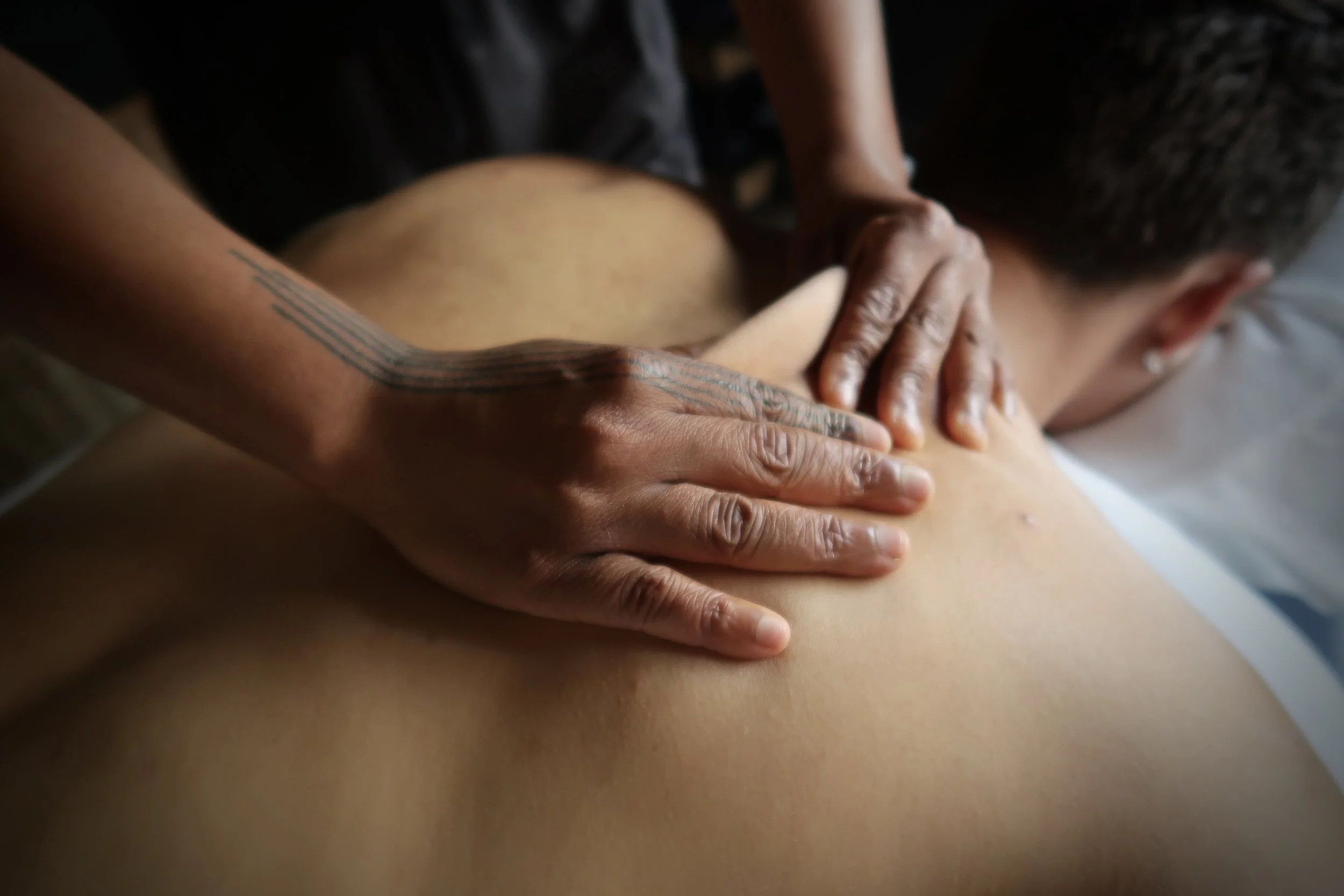
Massage therapist Channara performing skin rolling, a myofascial technique that lifts the skin and superficial fascia to ease restrictions thought to arise from adhesions or reduced tissue hydration between the connective tissue layers surrounding our muscles.
Which techniques do you most often reach for, and how would you describe the Jing Method to someone who has never heard of it?
AMMA Therapy and Breathwork
I often begin a treatment with simple breath-work and AMMA therapy, a Japanese acupressure-based bodywork technique that uses slow, rhythmic compression. I synchronise the work with the client's breathing, encouraging awareness of the breath and particularly the exhale. Many people arrive carrying a lot of tension, stress or pain, and this gentle compression often acts as an invitation for the body to soften, sink into the couch and begin letting go of unnecessary holding patterns. It creates a sense of grounding and helps people arrive fully in the room before we move into more specific work.
Myofascial Release and the Fascial System
From there I move into myofascial work. One of my favourite aspects of the Jing Method is the emphasis on working slowly through the fascial system. This work is often performed without wax or oil, allowing me to engage directly with the fascia and explore areas of restriction, density or reduced movement. I find this slower pace gives both the tissue and nervous system time to respond and adapt.
A major influence on my work has been Gil Hedley's approach to anatomy and fascia. His teachings have encouraged me to approach the body with curiosity, patience and respect. I'm fascinated by the growing body of research exploring fascia as one of the most richly innervated tissues in the body, and by its potential role in proprioception, interoception and pain perception.
Trigger Point Therapy
After the tissue has softened and the body has had time to settle, I often incorporate more precise trigger point therapy to address specific areas of pain and referral patterns.
PNF Stretching and Assisted Stretching
Stretching is also an important part of my treatments, having worked at a stretch clinic specialising in assisted stretching techniques including Proprioceptive Neuromuscular Facilitation (PNF) stretching, and having also trained in Yin Yoga. While stretching is often thought of purely in terms of flexibility, I see it as a powerful way of communicating with the nervous system. Rather than forcing tissues to lengthen, effective stretching creates opportunities for the body to feel safe enough to access greater freedom of movement. I often incorporate assisted stretching into treatments to help clients explore new movement options, improve body awareness and develop a greater sense of ease and confidence in their bodies.
I also love using acupressure points throughout treatments. I am fascinated by emerging research exploring correlations between fascial planes, connective tissue cleavages and the locations of traditional acupuncture and acupressure points. Clinically, I often notice remarkably consistent responses when working with particular points. It is not uncommon to see a client's breathing suddenly deepen, their shoulders soften, or to feel a palpable sense of release move through the body.
What interests me most is how all of these techniques can support interoception - our ability to perceive and interpret sensations arising from within the body. This is particularly important for people living with chronic pain, trauma, burnout or stress.
Because of this, I see the treatment as dynamic and ongoing conversation. The treatment evolves through continual feedback and collaboration. Throughout the session I'll check in about pressure, comfort and direction, and together we'll work out what feels most helpful for your body on that particular day.
Trauma-Informed, Consent-Led Massage Therapy in Dalston
You describe your treatments as slow paced, nurturing and consent led. Why does pace matter so much to you, and what does "consent led" actually look like, moment to moment, during a session?
My treatments are slow-paced, collaborative and consent-led. For me, pauses are just as important as techniques. Giving someone time to notice what they're feeling, process a sensation, or decide what they want next can be incredibly powerful. Consent isn't something that happens once at the beginning of a treatment. It's an ongoing conversation. Before we begin, we'll discuss your goals, preferences and any areas you'd like me to avoid or approach with extra sensitivity. During the session I'll regularly check in about pressure, comfort and what feels helpful. I often invite clients to help shape the direction of the treatment. We might decide together which area to focus on next, whether you'd prefer more or less pressure, or what positions feel most comfortable. I believe clients are the experts on their own experience. My job is to listen carefully and adapt accordingly.
What do you generally hope a client walks away with after a session? For example, feeling relaxed and heard, more empowered and confident in their body, or with a better understanding of their pain.
Of course I hope people experience less pain and more ease in their bodies. But beyond that, I hope they leave feeling heard, understood and more connected to themselves. I hope they walk away with a greater sense of agency and confidence in their body, and perhaps a little more curiosity about what it might be trying to communicate.
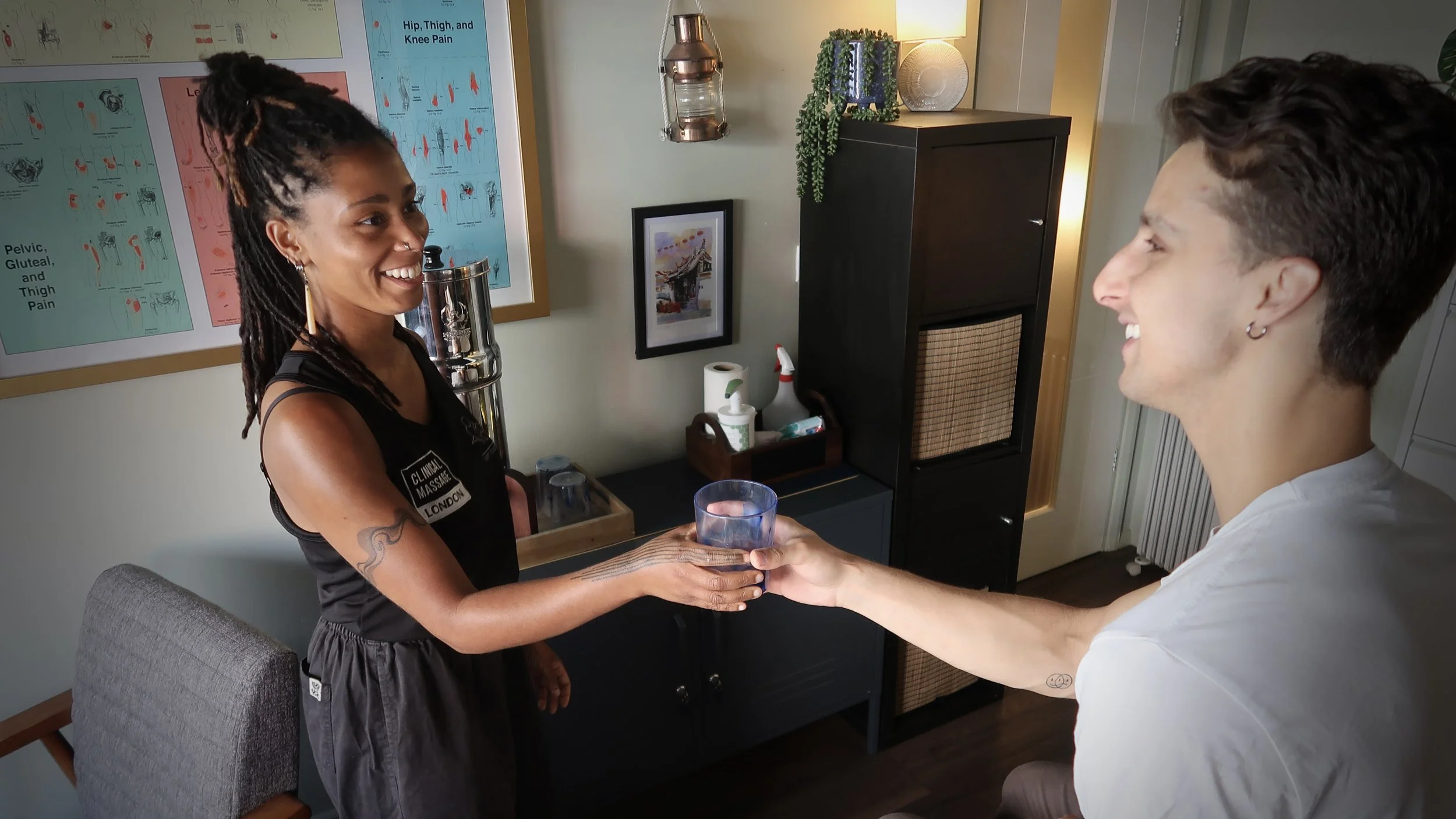
Before the session starts Channara likes to discuss her client’s your goals, preferences and any areas they’d like her to avoid or approach with extra sensitivity.
Herbal Medicine, Horticulture and Staying Grounded
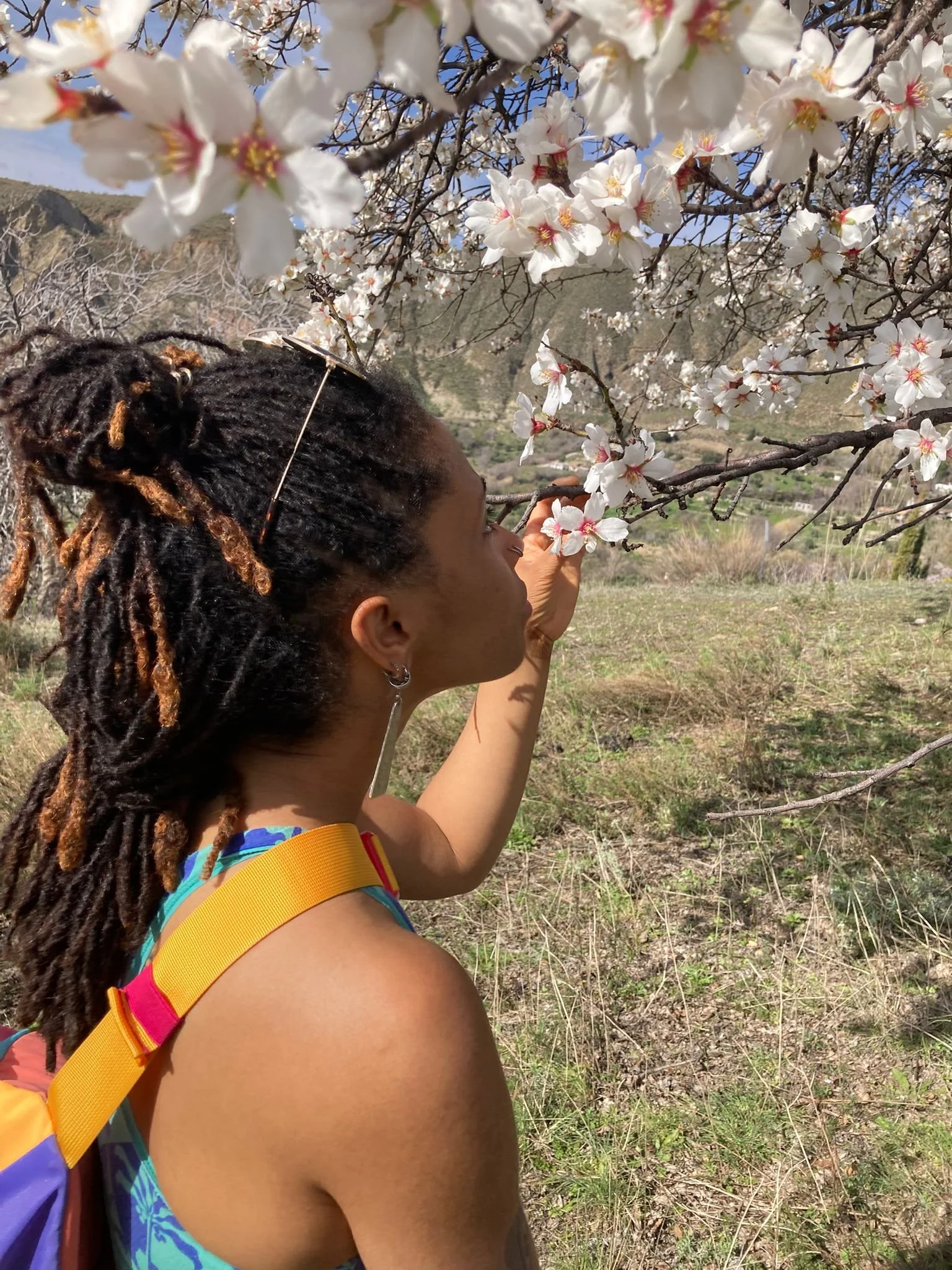
Alongside massage, Channara has passion for the grounding and healing potential of plants and the natural environment. She is currently completing her studies in horticulture and herbal medicine alongside her BTEC 6 in Clinical & Sport Massage therapy.
Outside of your practice, what do you enjoy doing to stay grounded?
Much of my life outside massage revolves around plants, food growing and spending time outdoors. Over the last few years I've been studying horticulture and herbal medicine alongside massage. I'm currently completing a Level 2 in Horticultural Skills, as well as training in Community Orchard Management. I'm particularly interested in rewilding and restoring our relationship with nature. I think many of us living in cities experience a profound disconnection from the natural world and from the rhythms that would have shaped the lives of our ancestors. Spending time growing food, tending plants, looking after soil and observing seasonal changes feels like an antidote to the chronic stress response that so many of us live with. Foraging has become one of my favourite grounding practices. I spend time throughout the year identifying and harvesting wild plants and herbs, paying attention to the changing seasons and lunar cycles. I also track my own cycle alongside these seasonal rhythms. In a world that often encourages us to move faster and disconnect from our bodies, these practices help me reconnect with natural cycles, cultivate presence and remember that we are part of a much larger ecosystem. Meditation, breathwork and walking in nature are all important parts of my own wellbeing practice.
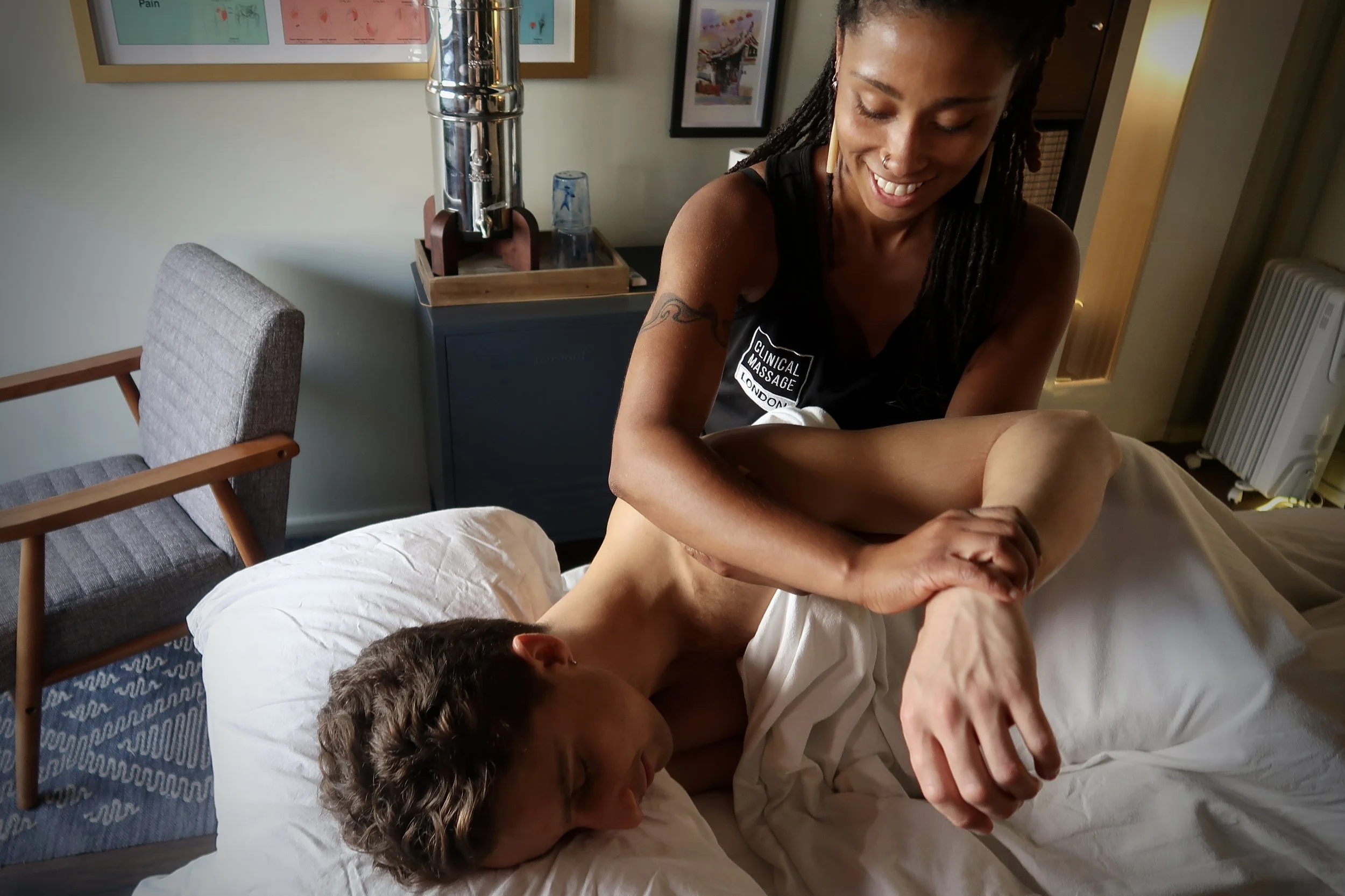
Meet Channara Agoro-Burns, our newest therapist at Clinical Massage London in Dalston.
Book a Massage Therapy Session in Dalston with Channara
Channara is an Advanced Clinical Massage Therapist with a background in neuroscience and a first-class degree in History and Arabic from SOAS. Currently completing her BTEC Level 6 Professional Diploma in Advanced Clinical Massage at Jing, she brings four years of clinical and holistic experience across private practice, hospice care, and workplace settings.
She works with a wide range of acute and chronic conditions, including fibromyalgia, migraines, soft tissue injuries, long COVID, EDS, and post-surgical rehabilitation, menstrual pain, drawing on clinical assessment, fascial work, trigger point therapy, acupressure, and shiatsu, among other techniques.