
Too Tired to Fix It Yourself: Why Massage Helps When the Usual Advice Isn't Working
KEY TAKEAWAYS
Stress, poor sleep and musculoskeletal pain are deeply interconnected - each one amplifies the others.
Massage may support a shift toward parasympathetic nervous system dominance, reducing cortisol and lowering resting muscle tone.
A single 30-minute session has been shown to measurably improve sleep quality indicators in poor sleepers (Ntoumas et al., 2025).
The quality of the therapeutic relationship matters. Evidence shows a strong therapeutic alliance measurably reduces pain intensity (Fuentes et al., 2014).
Massage is not a replacement for exercise, sleep or nutrition, but may help break the cycle when those habits have temporarily fallen away.

When exercise, sleep and nutrition aren’t happening - and you need a reset
By Natalie Heng, Clinical & Sports Massage Therapist (BTEC 6, SMA Reg) | Ex-Science Writer | BSc (Hons) Biological Sciences, Imperial College London
There's a particular kind of depletion that most of us recognise. The kind that builds when life gets demanding and the things that usually keep you well start falling away one by one.
We’ve all heard the advice. Exercise regularly. Sleep well. Eat better. And it’s true, those three pillars really are the foundation of good health. We all know life isn’t that simple though, demands on our schedules can wax and wane. We go through busy periods of work, deadlines, a bad patch of mental health or just generally get very busy.
And then things begin to compound: the commute drains you, the kids need you, you skip the gym for a week, you grab lunch at your desk. And now you’re too wired to sleep properly, your neck is stiff, your shoulders are up by your ears, your lower back aches and you can’t remember the last time you felt genuinely rested.
The frustrating part? Once you’re in that state; stressed, sore, sleeping badly - it becomes harder to get back to the things you know would help.The aches make it harder to exercise. The poor sleep makes everything feel heavier. The tension feeds into anxiety, which feeds into more tension, which feeds into worse sleep. It becomes a loop.

The Pain–Stress–Sleep Cycle
This isn’t just anecdotal. Research consistently shows that musculoskeletal pain, psychological stress, and poor sleep are deeply interconnected - each one amplifying the others in ways that can be genuinely difficult to untangle.
A 2021 review in The Lancet described chronic pain as a multidimensional experience shaped not just by tissue injury but by stress, mood, sleep quality, and how safe and supported someone feels (Cohen, Vase & Hooten, 2021). The biopsychosocial model of pain - now the dominant framework in modern pain science - recognises that what’s happening in your body can’t be separated from what’s happening in your life (Moseley & Butler, 2015).
In practical terms: if you’re overworked, under-slept, and carrying chronic tension in your neck and shoulders from ten-hour days at a laptop, that pain isn’t just “mechanical.” It’s being driven and sustained by the stress, the fatigue, and the lack of recovery time. And simply telling someone in that state to “exercise more and sleep better” isn’t always helpful, because the pain and exhaustion are the very things standing in the way.
The Body That Can't Stand Down
When stress is chronic rather than occasional, the body's stress response systems, primarily the sympathetic nervous system and the HPA (hypothalamic-pituitary-adrenal) axis, can become stuck in a state of sustained activation.
Under normal conditions, a stressor triggers a cascade of hormones including cortisol and adrenaline which the body mobilises to deal with the threat, the system then returns to baseline once the threat has passed. This is a process known as ‘allostasis’ - the body's capacity to maintain stability through change.
The problem arises when stressors are frequent enough, or sustained long enough, that recovery becomes incomplete.
‘Allostatic load’ refers to the state in which the normal allostatic processes fail to disengage or switch off, leaving the physiological systems unable to fully adapt, with the HPA axis, the sympathetic nervous system and the immune system all remaining in a state of chronic dysregulation (McEwen, 1998).
In practical terms, this means elevated baseline muscle tone, disrupted sleep architecture, heightened pain sensitivity and a nervous system that has recalibrated its threshold for threat upward.
The body then does what chronic stress asks it to do: stay alert, stay ready, stay ‘on’. But that state was designed for sprints, not marathons. And the cumulative cost to your health - your sense of calm, the ability to feel ‘rested’ is real.
This is also why the usual solutions often fall short when someone is genuinely depleted. Sleep hygiene advice doesn't land when the nervous system is too activated to reach deep sleep. Exercise feels impossible when the body is running on an energy deficit. Even mindfulness can feel like one more thing to fail at.
The problem isn't the advice - it's the physiological state the person is in when they try to act on it. In this instance, this is where massage for some people can be a helpful intervention. Getting any traction requires addressing the state of high-alert first. And if massage is something you enjoy, it can be the deeply relaxing reset your system needs.
How Massage Can Help Break the Stress-Tension-Pain Cycle
Skilled touch has a well-documented capacity to shift the autonomic nervous system toward parasympathetic dominance, lowering heart rate, reducing cortisol and decreasing overall muscle tone (Diego & Field, 2009). Massage can help, not as a cure, but as a meaningful supportive intervention.
In the context of allostatic load, that shift can give the body a window in which the stress response isn’t running, and in which some of the deferred maintenance, like tissue recovery, immune regulation, nervous system restoration, can begin.
A single session won't undo months of chronic stress. But regular massage, as part of a broader approach to recovery, can provide the kind of reliable, repeated signal the nervous system needs to begin recalibrating downward.
(We'll be exploring this in more depth in an upcoming piece on deep rest - the science of what genuine restoration actually looks like in the body, and what helps create the conditions for it. Look out for it soon.)
“The body does what chronic stress asks it to do: stay alert, stay ready, stay ‘on’. But that state was designed for sprints, not marathons. And the cumulative cost to your health - your sense of calm, the ability to feel ‘rested’ is real.”
What Massage Actually Does in This Situation
Massage isn’t a magic fix, and any honest therapist will tell you that. But when someone is caught in that cycle of tension, stress, poor sleep, and pain, a skilled massage session can act as a nervous system ‘reset’. Here's what the research suggests is happening:
It reduces physical tension directly.
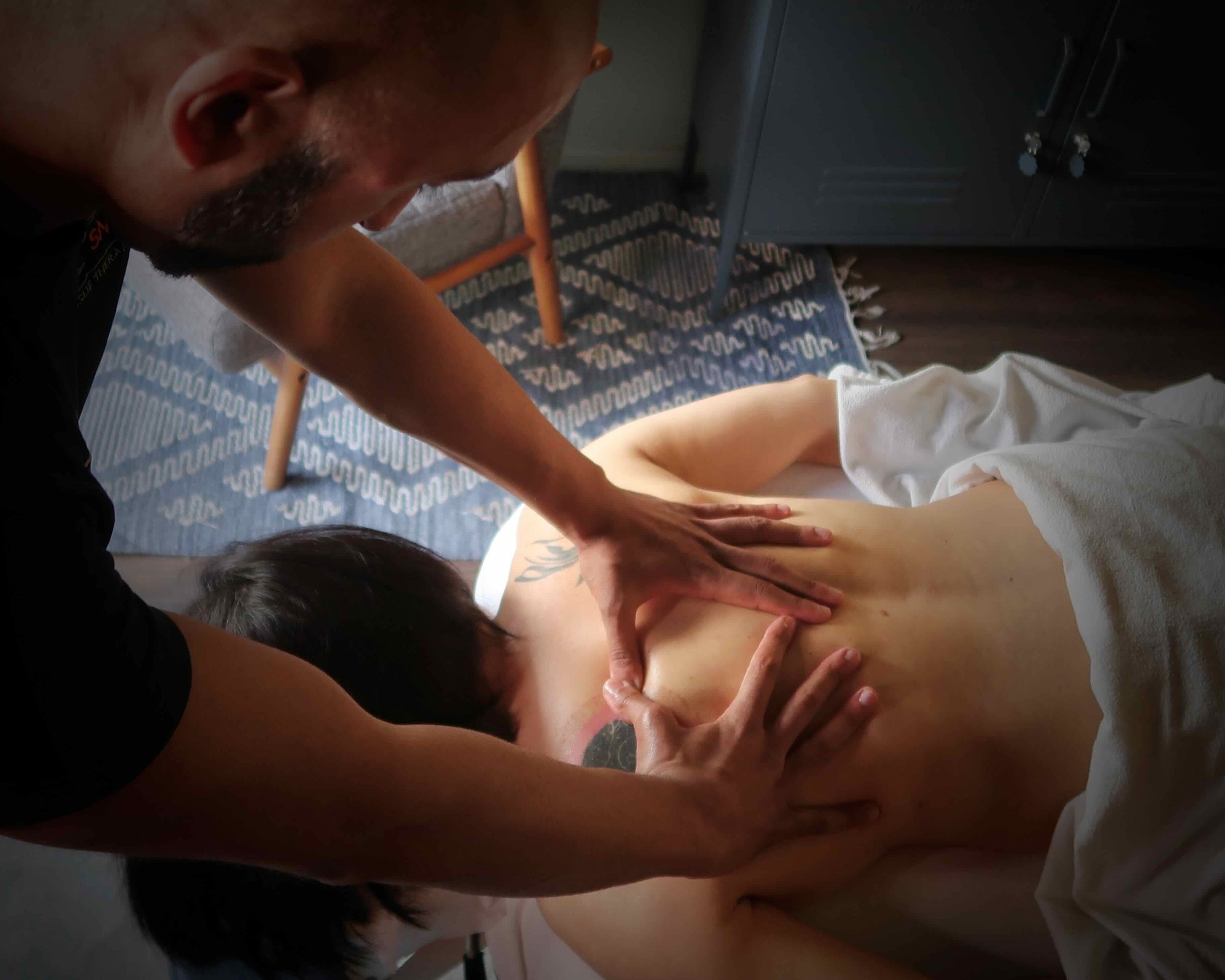
Sustained tension - whether from overwork, poor posture, stress or simply not moving enough - creates patterns of muscular hypertonicity and trigger points. Hands-on soft tissue work can reduce that tone, ease trigger point referral patterns and restore a sense of physical ease. This isn't just comfort, it directly reduces the metabolic cost the body is paying to maintain that chronic tension. A systematic review of 26 trials found massage reduces pain and improves physical function in people with musculoskeletal conditions compared to no treatment (Bervoets et al., 2015).
It shifts the nervous system toward rest
Massage has been shown to shift the autonomic nervous system toward parasympathetic dominance - lowering heart rate, reducing sympathetic arousal and creating a physiological state more conducive to relaxation and sleep (Diego & Field, 2009). In the context of allostatic load this matters specifically: it gives the body a window in which the stress response is not running, and in which the deferred maintenance work - tissue repair, immune regulation, cellular restoration can begin. It's not just about the muscles. It's about helping the whole system downregulate after weeks or months of sustained activation.
It can improve sleep quality.
A recent randomised controlled trial found that a single 30-minute session of either relaxation or sports massage reduced muscle tone, increased subjective relaxation, and improved indicators of sleep quality in poor sleepers (Ntoumas et al., 2025).
It gives you space to feel heard.
This one often gets overlooked, but it matters. A good therapist listens. They ask about your week, your sleep, what's going on beyond the physical symptoms. They tailor the treatment to what they find rather than delivering a pre-set routine. That therapeutic alliance - the felt sense of being understood and responded to is itself a component of effective pain management. One controlled study found that an enhanced therapeutic alliance between therapist and patient significantly modulated pain intensity in people with chronic low back pain (Fuentes et al., 2014). When someone pays attention to how your body feels and adapts accordingly, it's easier to let go, and that matters for recovery.
The Gap Massage Fills
So here’s the honest framing: massage isn’t a replacement for exercise, sleep, and nutrition. Those things remain fundamental. But massage can fill the gap when life has knocked those habits out from under you.
Think of it as a reset point. You come in carrying weeks of accumulated tension, poor sleep, and low-grade stress. A good session can bring down the physical tension, calm the nervous system, ease the aches, and help you sleep better, even if it’s just for a night or two. And that matters, because feeling a bit better, a bit more rested, a bit less sore can be exactly the nudge you need to get back into a broader self-care routine.
It’s not about relying on massage forever. It’s about using it strategically, when you need it, to break the cycle and create the conditions for everything else to fall back into place.
“It’s not about relying on massage forever. It’s about using it strategically, when you need it, to break the cycle and create the conditions for everything else to fall back into place.”
Who You See Matters
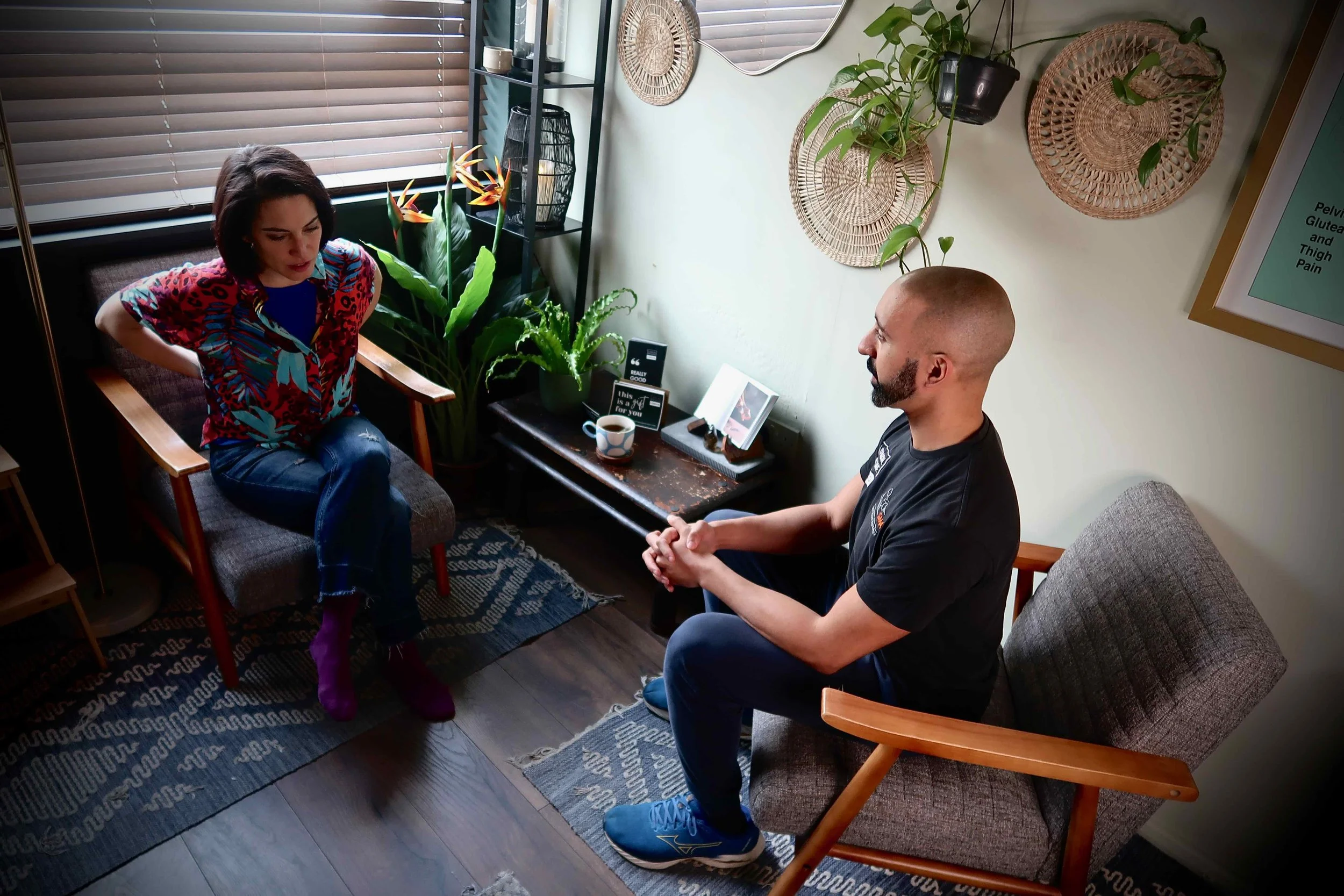
One thing I’d emphasise is not all massage is the same. And who you see, matters. If your pain is muscular in origin - tension headaches, upper back stiffness, shoulder aching from desk posture for example, a well-qualified clinical or sports massage therapist can assess what’s going on, work on the relevant tissues with skill, and give you practical advice alongside the treatment.
Look for someone who is properly qualified -Level 4 or above in the UK is a good bet, but reading therapist reviews is the best way to get a feel for someone; registered with a professional body; and who takes the time to understand your situation before diving in. A therapist who makes you feel heard, explains what they’re doing, and adapts the session to you, rather than delivering a one-size-fits-all routine, is going to get you better results.
What Helps Between Sessions
Massage works best as part of a broader approach, not as the only intervention. If you're in this pattern and want to make the most of any treatment you have, here are a few things are worth building in alongside it.
Movement breaks > The research on prolonged sitting consistently shows that short, frequent movement breaks can help alleviate musculoskeletal discomfort (Waongenngarm, Areerak & Janwantanakul, 2018). Standing up, walking to another room, doing a few shoulder rolls or a gentle neck stretch every 45 to 60 minutes is enough to interrupt the sustained static loading that drives the tension pattern described above.
Slow, deliberate breathing > When you’re stressed or under sustained work pressure, breathing tends to become shallower and faster without you noticing. If that’s the case, try taking a few minutes to breathe slowly and deliberately. This activates the vagus nerve and shifts the nervous system toward parasympathetic dominance. Five minutes, once or twice a day, done consistently over a few weeks has been shown to have measurable effects on heart rate variability and baseline stress levels (Laborde et al., 2022).
Sleep position and pillow height > Worth reviewing if you're waking with neck pain or stiffness. If you are a side sleeper, try making sure you have a thick-enough pillow that it keeps your head in neutral (not tilted toward or away from your shoulder), as this should help reduce overnight load on the cervical muscles. Back sleepers generally do better with a lower, medium-firm pillow that supports the natural inward curve of the neck without pushing the chin toward the chest, and for front sleepers, a thin pillow, or none at all, reduces the angle of rotation and the load on the cervical structures.
None of these require significant time. All of them compound over weeks. And crucially, none of them are in competition with massage - they work best together. Movement breaks reduce the load that builds between sessions. Breathing practice reinforces the parasympathetic shift that massage initiates. Attention to sleep position means the recovery work that happens during sleep isn't being undone by eight hours in a poor mechanical position.
The Takeaway
If you’re in one of those phases - stressed, sore, not sleeping well, struggling to find time for exercise or self-care - don’t beat yourself up about it. It happens to everyone. If you want a little help, consider booking a massage with a competent therapist you trust, giving you some time to take a breather, reset and relax.
It won’t fix everything. But it might help you feel more like yourself again - and that’s often all you need to start getting back on track.
References
Bervoets, D.C., Luijsterburg, P.A.J., Alessie, J.J.N., Buijs, M.J. & Verhagen, A.P. (2015). Massage therapy has short-term benefits for people with common musculoskeletal disorders compared to no treatment: a systematic review. Journal of Physiotherapy, 61(3), 106–116. [Full text]
Cohen, S.P., Vase, L. & Hooten, W.M. (2021). Chronic pain: an update on burden, best practices, and new advances. The Lancet, 397(10289), 2082–2097. [Full text]
Diego, M.A. & Field, T. (2009). Moderate pressure massage elicits a parasympathetic nervous system response. International Journal of Neuroscience, 119(5), 630–638. [Full text]
Fuentes, J., Armijo-Olivo, S., Funabashi, M., Miciak, M., Dick, B., Warren, S., Rashiq, S., Magee, D.J. & Gross, D.P. (2014). Enhanced therapeutic alliance modulates pain intensity and muscle pain sensitivity in patients with chronic low back pain: An experimental controlled study. Physical Therapy, 94(4), 477–489. [Full text]
McEwen, B.S. (1998), as cited in: Logan, J.G. & Barksdale, D.J. (2008). Allostasis and allostatic load: expanding the discourse on stress and cardiovascular disease. Journal of Clinical Nursing, 17(7b), 201–208. Full text
Moseley, G.L. & Butler, D.S. (2015). Fifteen years of explaining pain: The past, present, and future. The Journal of Pain, 16(9), 807–813. [Full text]
Ntoumas, K., Karatzaferi, C., Boubougiatzi, G., Louvaris, Z., Giannaki, C.D., Maridaki, M. & Sakkas, G.K. (2025). Massage positively influences daytime brain activity and reduces arousal state in poor sleepers: A randomised controlled trial. BMC Complementary Medicine and Therapies, 25, 290. [Full text]
Laborde, S., Iskra, M., Zammit, N., Borges, U., You, M., Sevoz-Couche, C. & Dosseville, F. (2022). Effects of voluntary slow breathing on heart rate and heart rate variability: a systematic review and meta-analysis. Neuroscience & Biobehavioral Reviews, 138, 104711.https://doi.org/10.1016/j.neubiorev.2022.104711
Waongenngarm, P., Areerak, K. & Janwantanakul, P. (2018). The effects of breaks on low back pain, discomfort, and work productivity in office workers: a systematic review of randomized and non-randomized controlled trials. Applied Ergonomics, 68, 230–239. https://doi.org/10.1016/j.apergo.2017.12.003